16 November – 11 December 2016
Doris Bush
Martha MacDonald
Isobel Major
Candy Nelson
Maureen Poulson
Beyula Napanangka
Curated by
Siân McIntyre
D_O_T
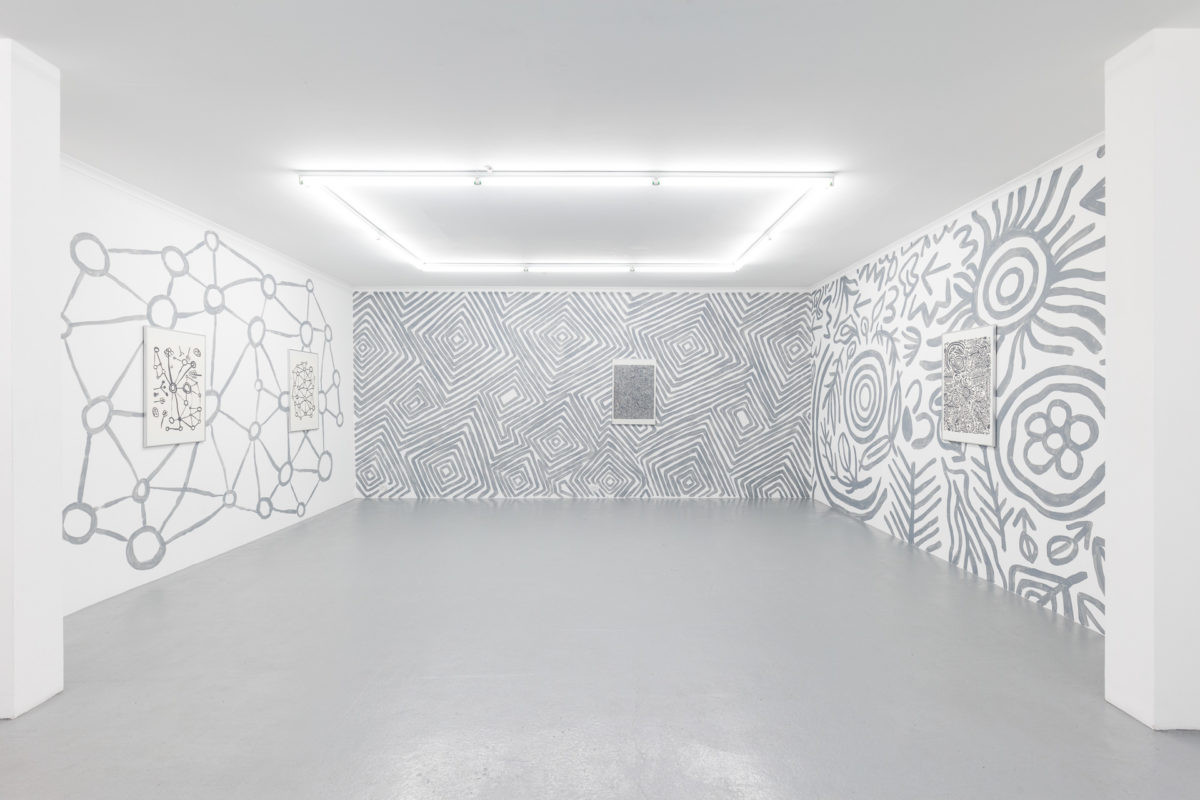
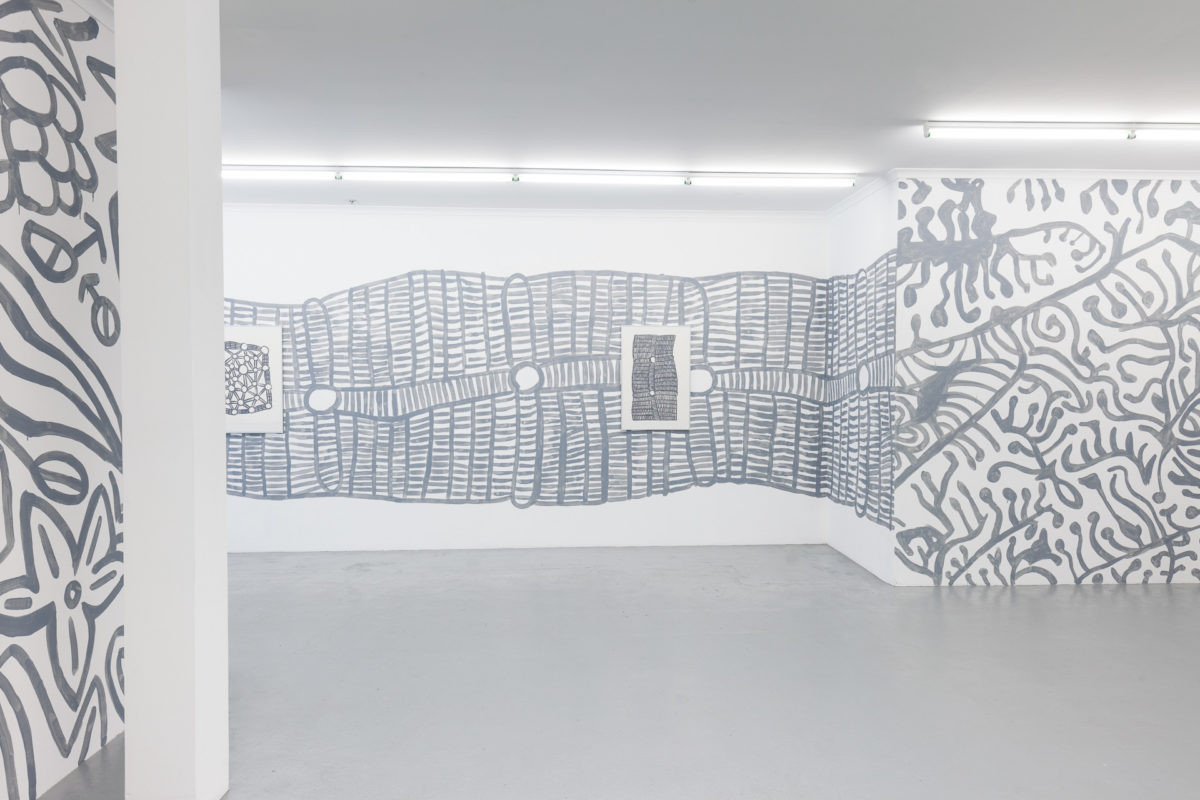
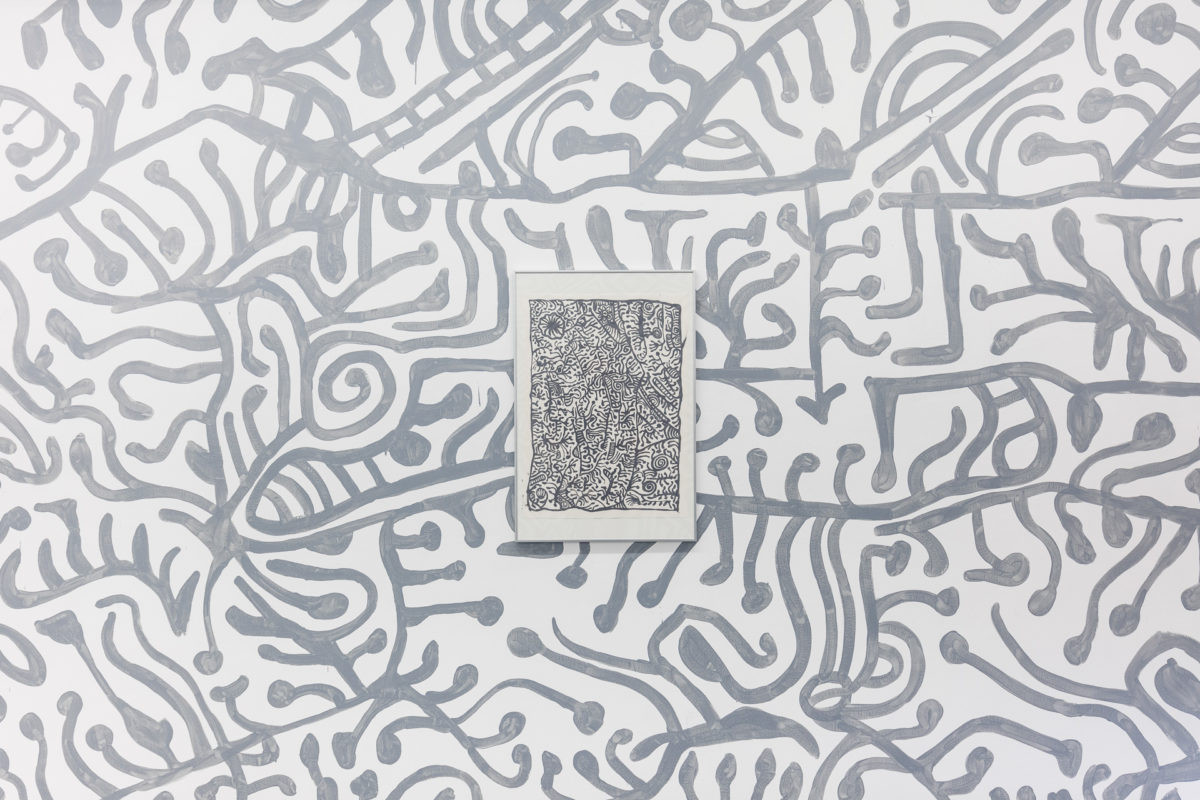
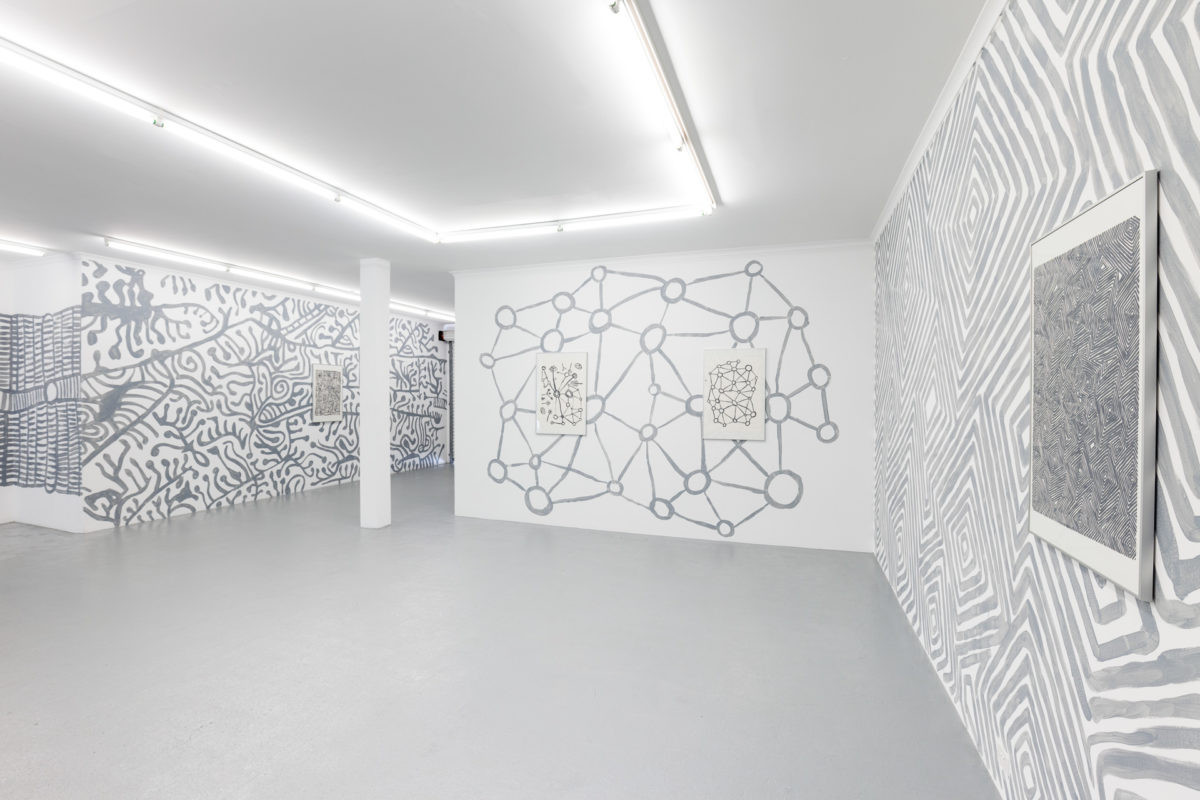
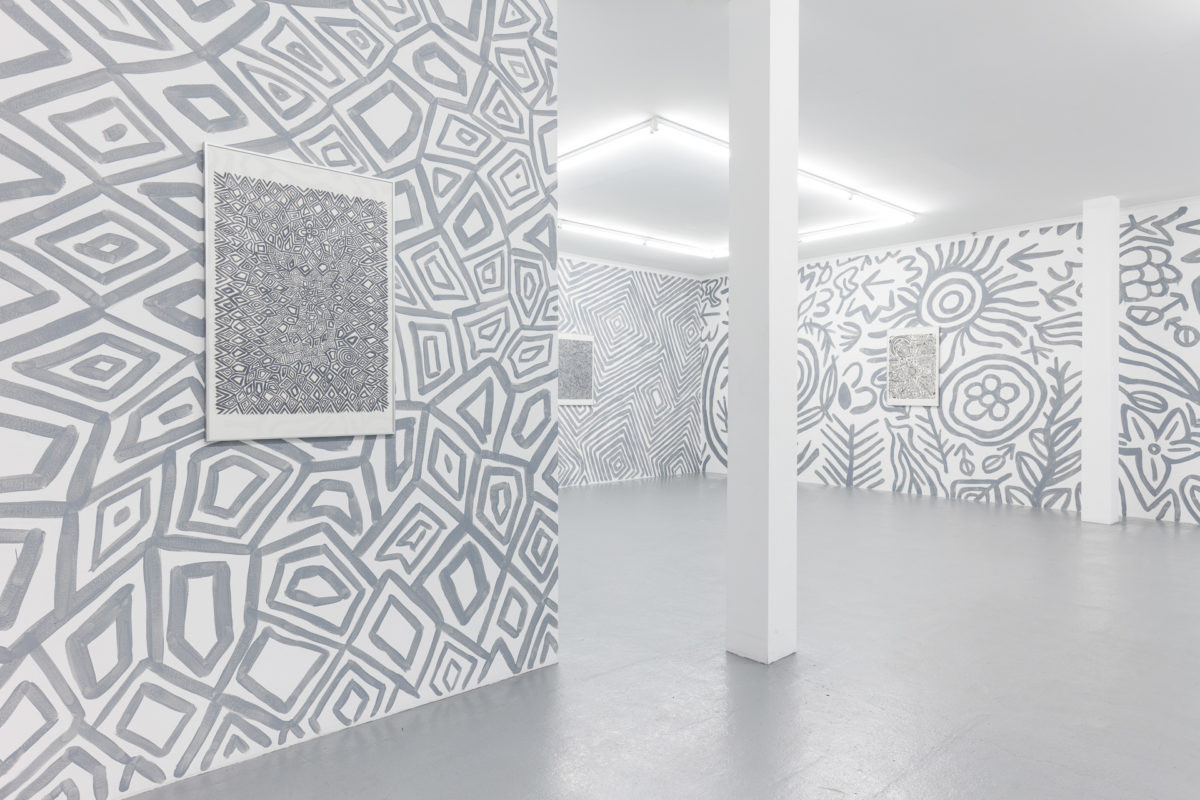
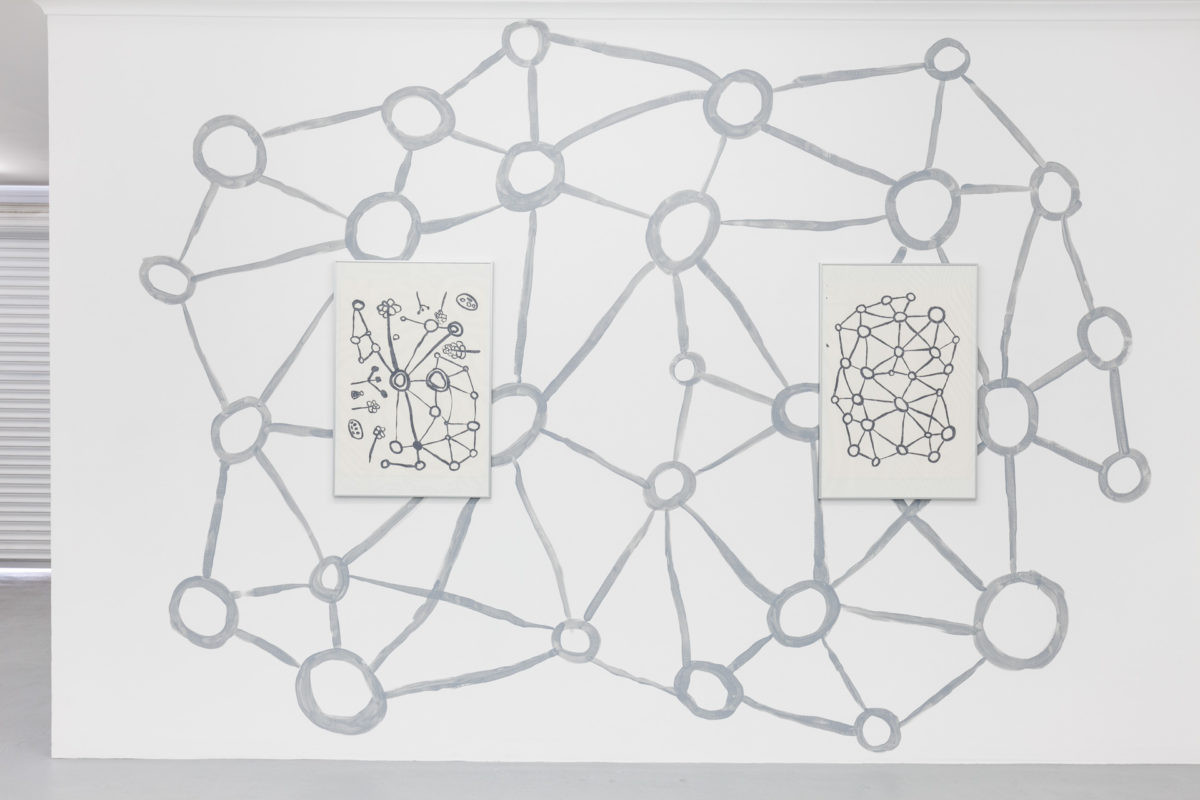
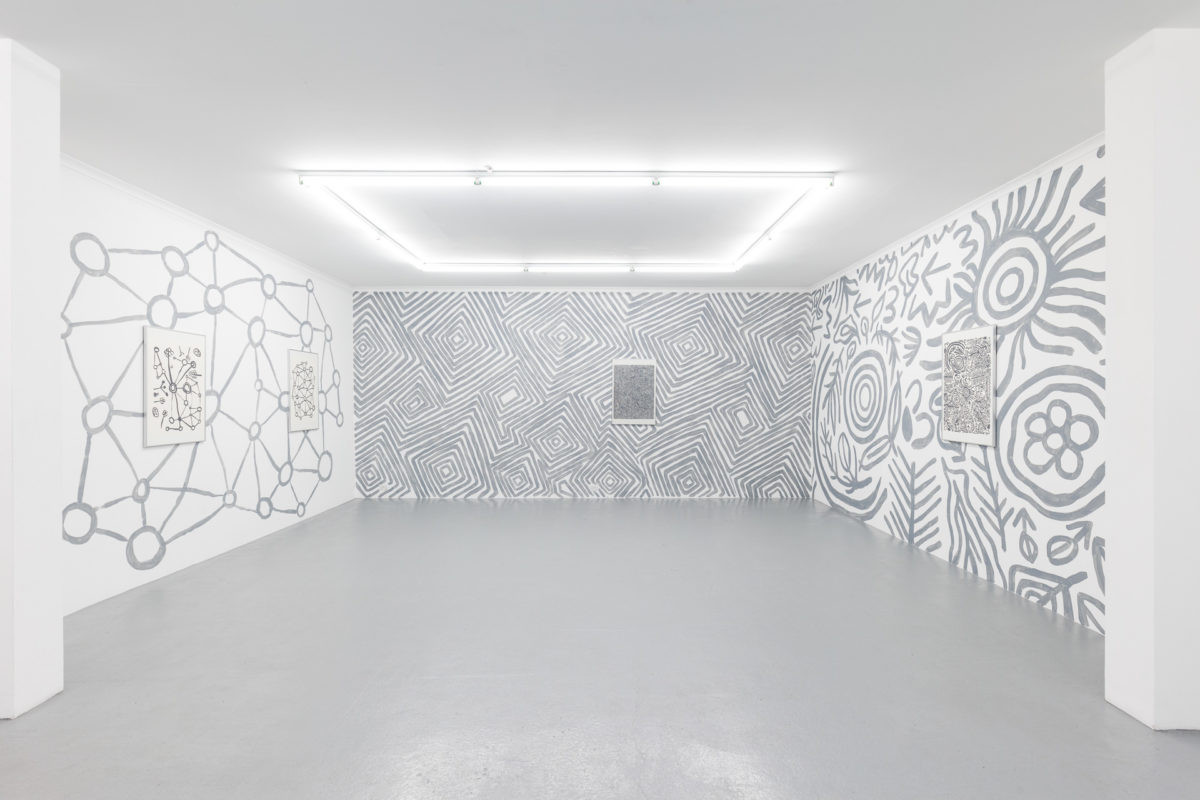
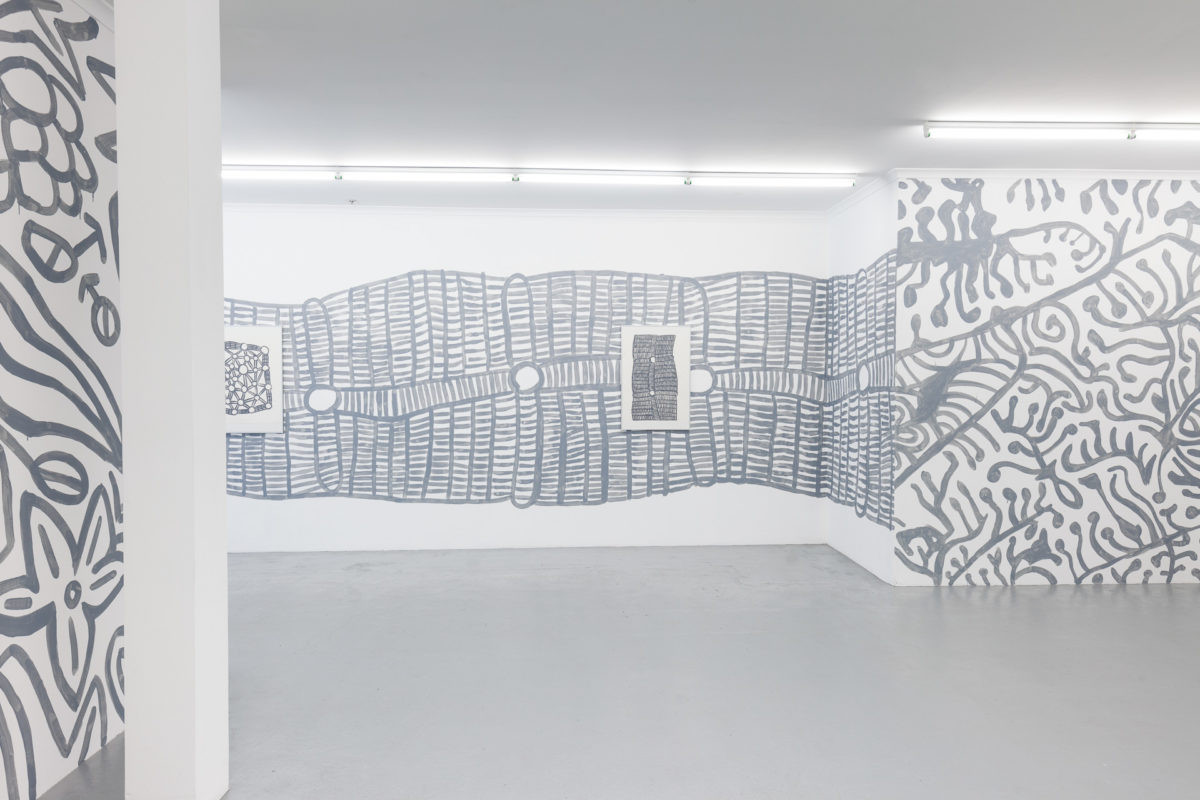
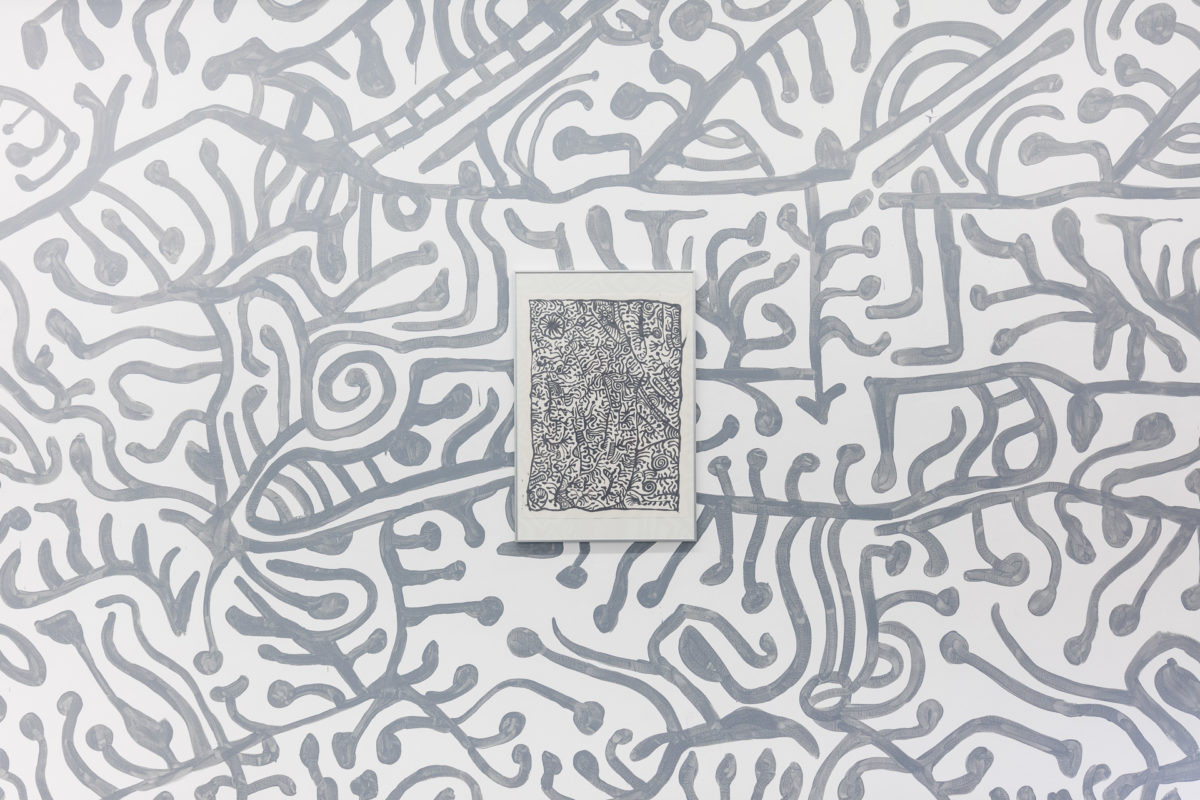
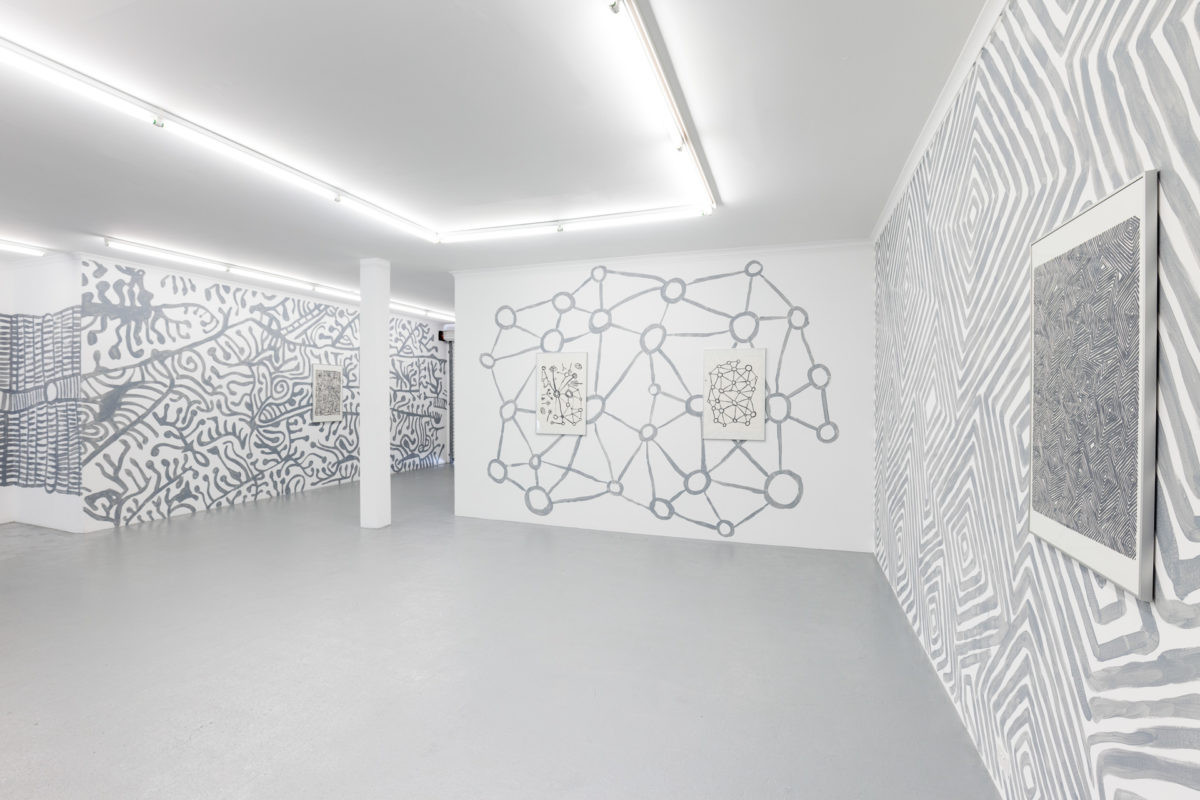
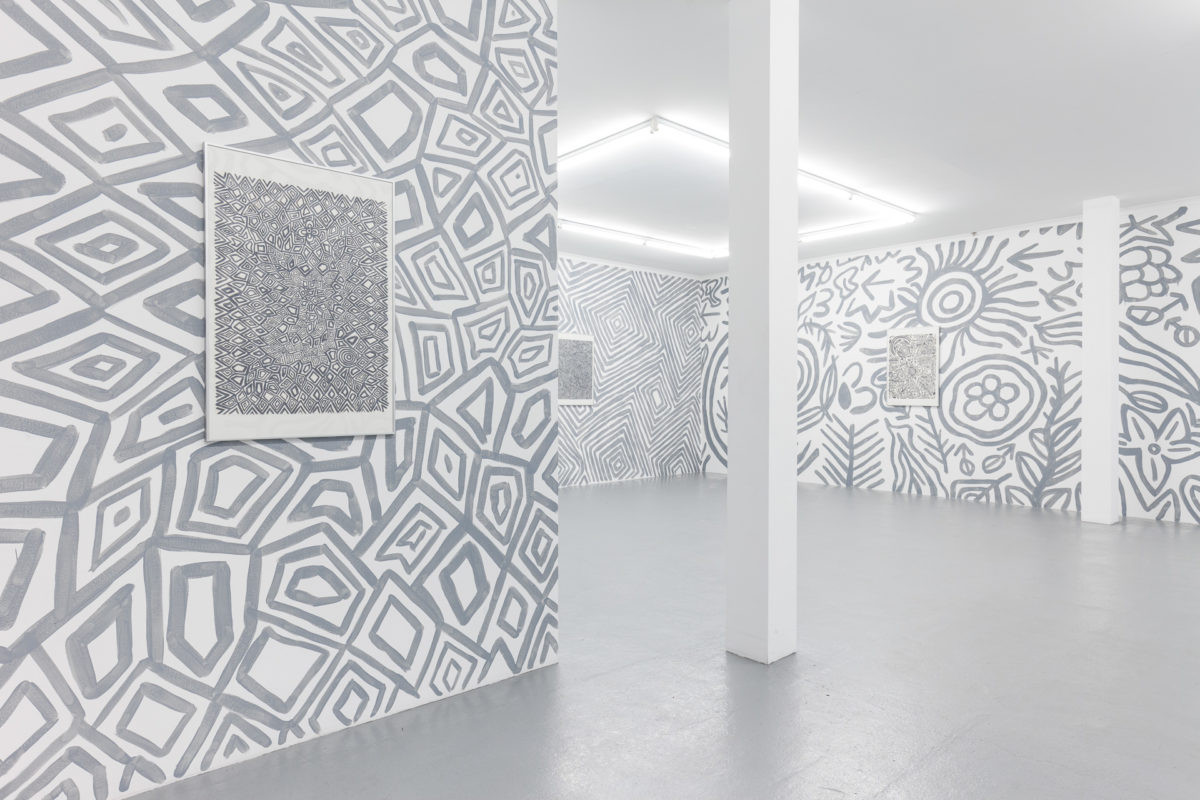
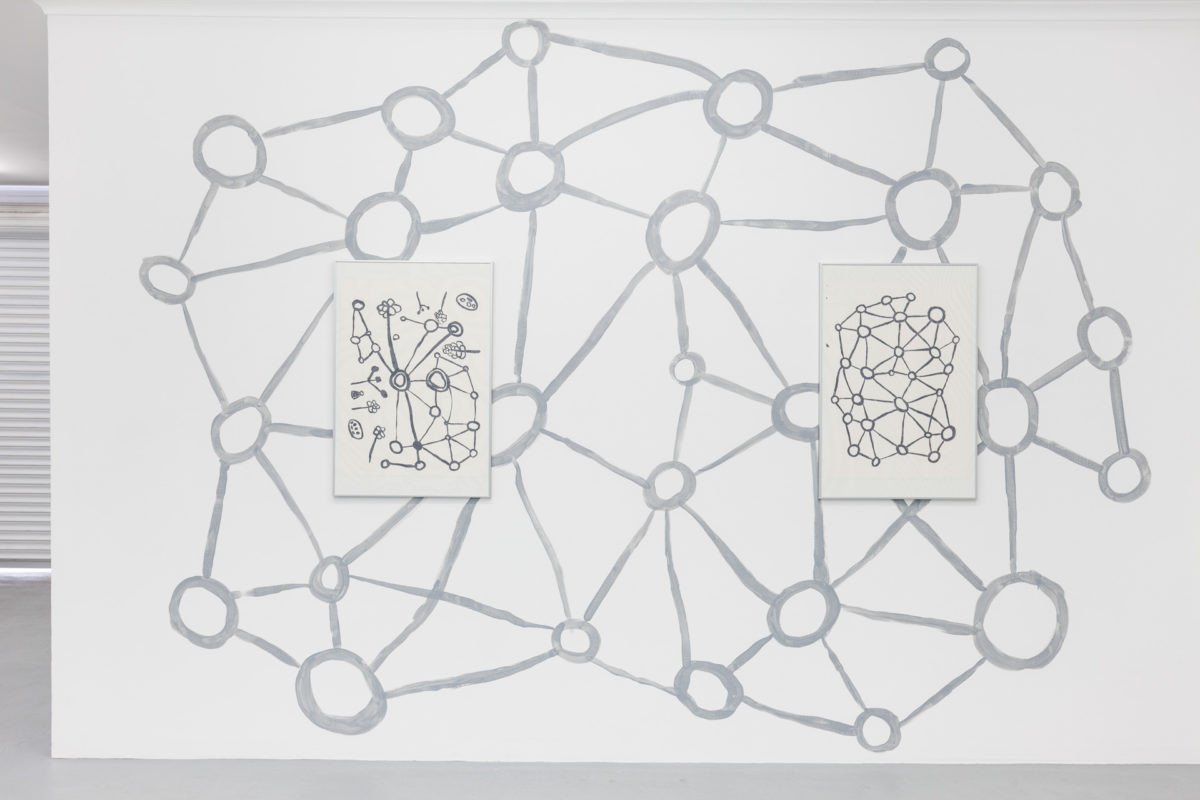
The lines of painters Doris Bush, Martha MacDonald, Isobel Major, Candy Nelson, Maureen Poulson, Beyula Puntungka are presented on a background that engulfs the Galerie pompom space. The traced lines act as a ‘contemporary’ stage for the original works on paper, expanding beyond the frames on a scale that is all encompassing. These works are not depicting shapes or forms that commonly exist within spaces such as pompom. Rarely do we engage with Western Desert painting in a conceptual, contemporary inner city gallery space. In Sydney, Western Desert paintings are usually located in galleries that specialise in the sale of Aboriginal art, in major cultural institutions as part of their art collections or as furnishings in a corporate boardroom. Often when Western Desert paintings are exhibited in these spaces they are accompanied by clear texts outlining the Tjukurrpa that is associated with the designs depicted on the canvas. This allows the viewer an access point, a point of reference, an understanding that here, a circle means a gathering site or there, a U shape symbolises a woman. We have learnt to read these shapes in the same way as we would decode hieroglyphics on a stone; static, historical and ancient.
The artists shown in DOT paint almost daily at Papunya Tjupi Arts, their practice is not static; it is evolving. While many of the stories are passed down through familial lines, the interpretation and visual representation changes with each retelling. During the 8 years that I have come and gone from the Papunya Tjupi Art Centre I have been fortunate to witness each artist’s work as it has developed and changed. Candy Nelson has bold linework that she underpins with washes and then layers with intricate dotting. Maureen Poulson’s optical illusionary diamonds work within a system, where she plans the linework meticulously, using the span of her hand as a measurement. Martha MacDonald’s linework and confident fluidity in form speaks of her experience and talent. Isobel Major’s lines are a recent development, where she has moved from curved arcs to the intricate web-like diamond shapes you see here. The painterly detail of Beyula Puntungka’s work is rarely seen beneath the thick dotting that sits in and around these delicate lines. Doris Bush is one of the first artists from Papunya Tjupi Arts to develop an autobiographical story in her painting practice, speaking of her own lived experience and relationships, she tells this story amongst her other formal narratives. Doris often sings or speaks about the story she is painting while she is working.
Through DOT I aim to present the works of Doris Bush, Martha MacDonald, Isobel Major, Candy Nelson, Maureen Poulson and Beyula Puntungka as contemporary, changing, current and responsive to the lived histories of these artists and their ancestors. The large-scale traced lines, painted in the same tone as the gallery floor, uses the drama of contemporary installation as a stage for the original works, drawing the viewer in to the more detailed marks of the artists. The series of original line paintings produced by the artists in September are drawings, without the ‘dots’ for which Papunya paintings are so well known. They represent the foundation of many of these artists’ painting practices. Framed, projected and traced with the artists’ permission, I hope that the lines shown feel overwhelming and exciting, inaccessible yet inviting; representing a visual language that has not been translated for mass consumption. This may create an unnerving or unclear environment, however I think Australians should strive to surround ourselves with people, histories, stories and experiences that make us feel unsteady and unsure of our place in this country.
Although this exhibition has been developed on site in Papunya in discussion with exhibited artists, there is an unease associated with representing works such as these outside their regular context and form. As a part of this exhibition there will be a discussion about this anxiety titled Indigenising the White Cube :: re-thinking curatorial practices, which aims to pick at some of the issues raised in DOT, inviting Indigenous artists and curators and non-indigenous curators who have worked with Indigenous artists to discuss the modes of representation of Indigenous art in contemporary spaces. This esteemed panel led by Stephen Gilchrist will be sharing their own experiences of anxiety, anger, excitement, failures and successes in collaboration and curation, and will also be providing honest opinions for improving curatorial practice and representation in commercial and institutional gallery contexts.
Siân McIntyre, November 2016
Curated by Siân McIntyre with installation design assistance from Anne-Louise Dadak
Presented by Verge Gallery in collaboration with Papunya Tjupi Arts
Photos: Docqment