Throughout cinematic history countless filmmakers have drawn inspiration from the gestures, palettes and compositions of great painters in order to permeate cinematic space with visually discernible emotion and narrative. Martin Scorsese delighted at Caravaggio’s frankness, Lars von Trier’s Melancholia (2011) mirrored the light of Johannes Vermeer to suffocating effect and Edward Hopper’s urban settings have acted as back-drops within numerous films including Hitchcock’s Psycho (1960). Returning this gaze, painters (most notably Richter, Warhol and Doig) have looked to film and its personas, employing techniques such as over-blowing the iconic or the serial, to de- symbolise and empty-out the art object. The two mediums have time and time again bounced back to one another in a procession of image making. It is this referential dialogue that Nicola Smith uses as a platform for her beautifully devoted practice that has at its root a personal enquiry into painting, visual repetition and memory.
Sydney born Nicola Smith has always been passionate about the act of painting. Interestingly, the artist’s shift towards film began following extensive travel overseas, after which she relocated to Hobart for her Honours degree at the Tasmanian School of Art in 2009. The astonishing body of work produced during this period – The Crowed Overwhelms Baptiste (2009) – comprised over one hundred oil paintings that depicted French actor Jean-Louis Barrault as mime Baptiste, in the final crowd scene in Marcel Carné and Jacques Prévert’s seminal film Les Enfants du paradis (1945). This impressive undertaking took inspiration from a photograph of this terrifying finale discovered by Smith while researching the film, the still image revealing the complexity of the crowd that the cinema spectator comes to miss. Les Enfants du paradis, or Children of Paradise, sets a story of unattainable love in the Parisian theatre world of the mid 19th century. A landmark of poetic realism, a movement of the 1930s and 1940s often aligned with painting, that accentuated ‘the space of the story world: the setting and arrangement of figures…to emphasise the complex interplay between society and individuals.’1 It employed techniques such as mise-en-scène and evocative lighting to enable visual elements to ‘work in concert’ to allow ‘rich interpretations [to] grow out of serious contemplation of aesthetic elements.’2 The genre explored through painting became a rich resource for Smith, and the artist’s own intimate study is revealed in her ritualistic painted gestures and act of comparison as the original five turned into one hundred, each ‘filling in the gaps for the others.’
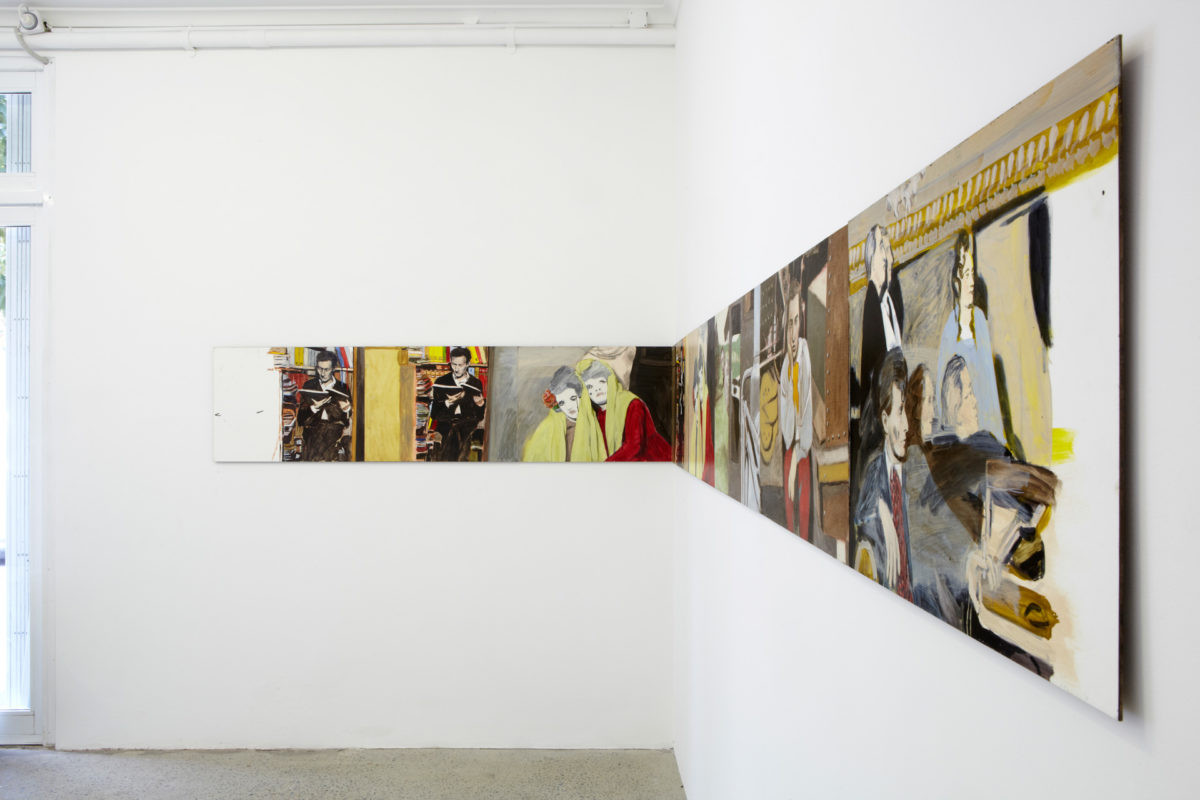
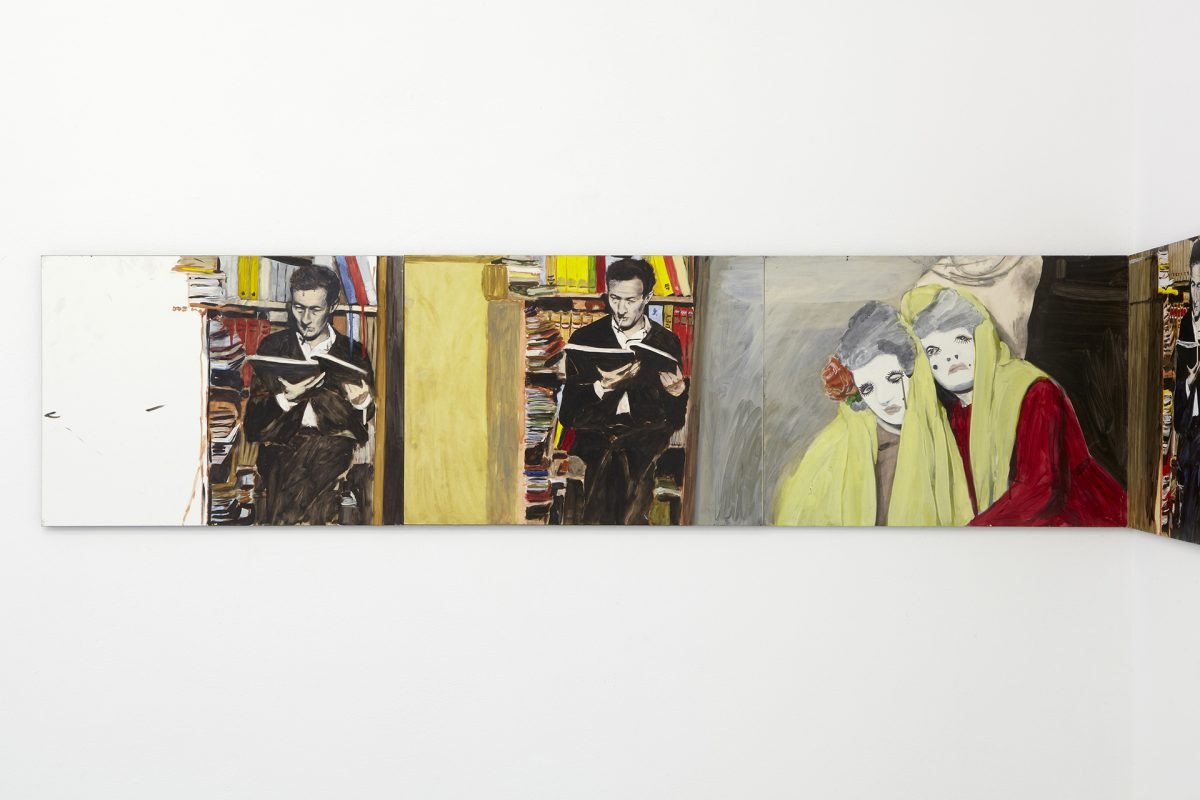
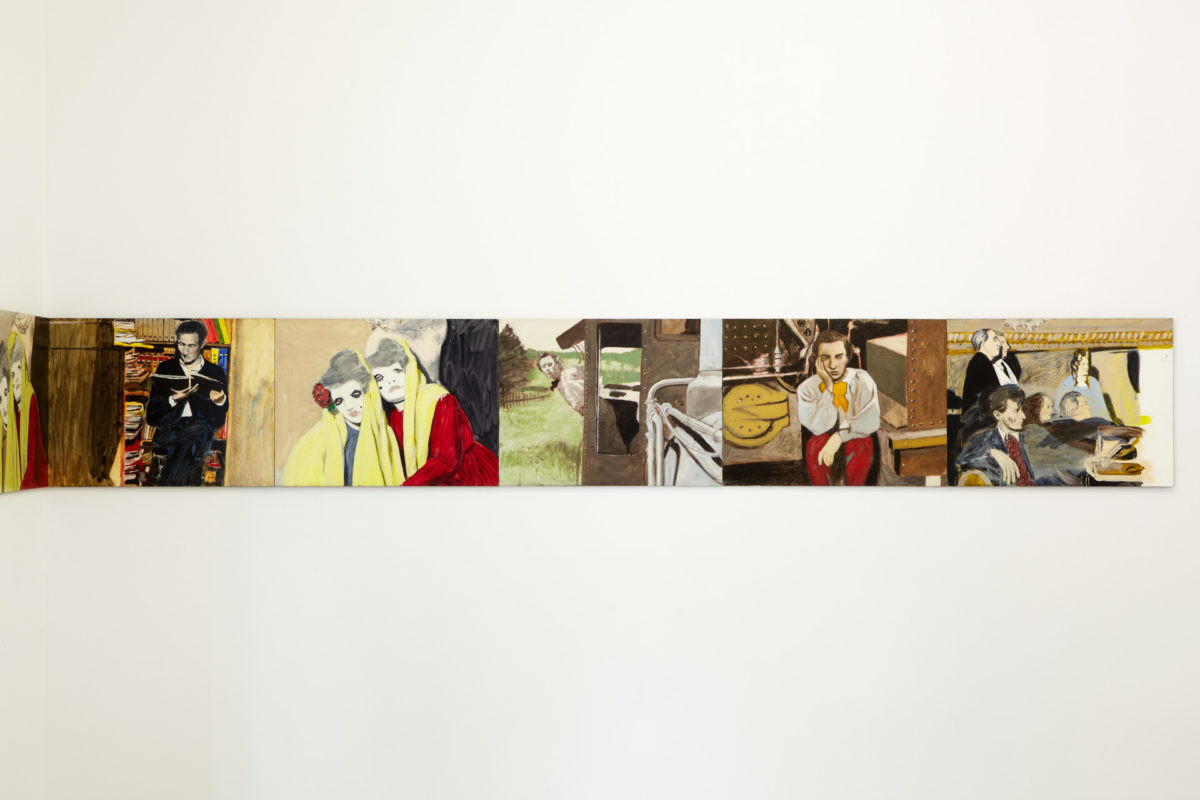
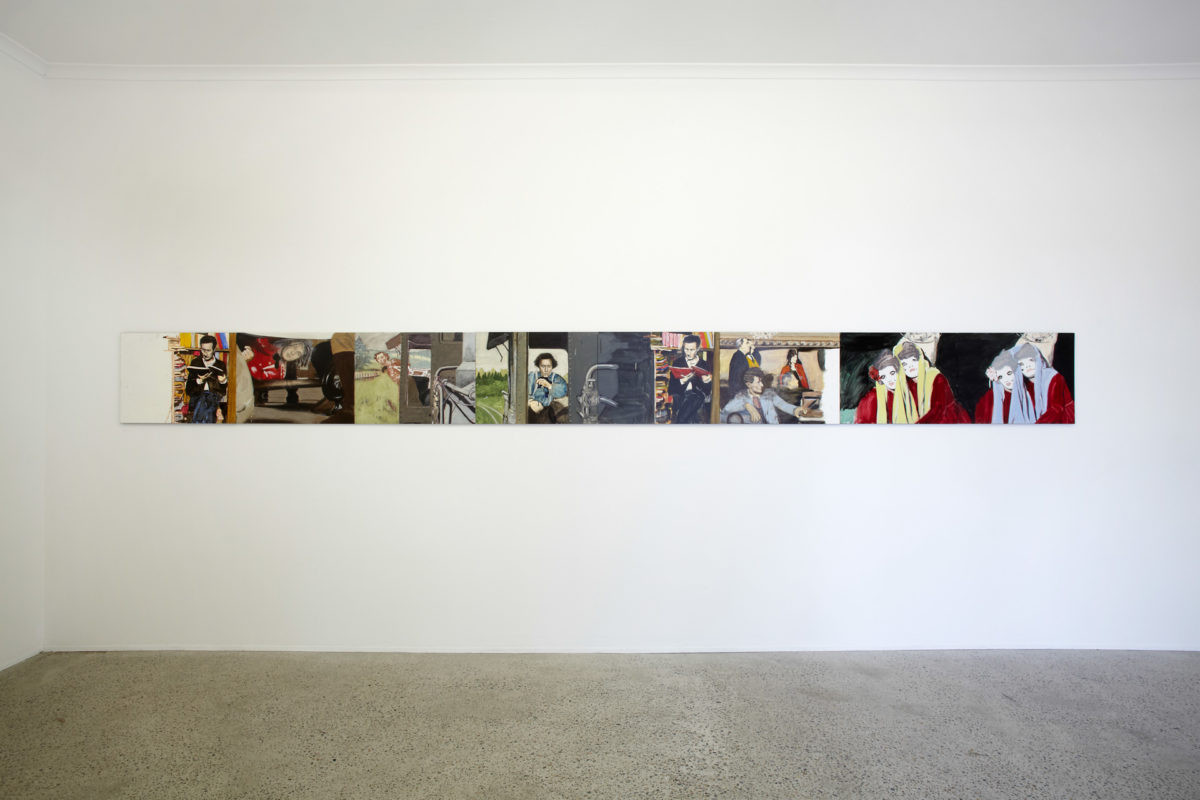
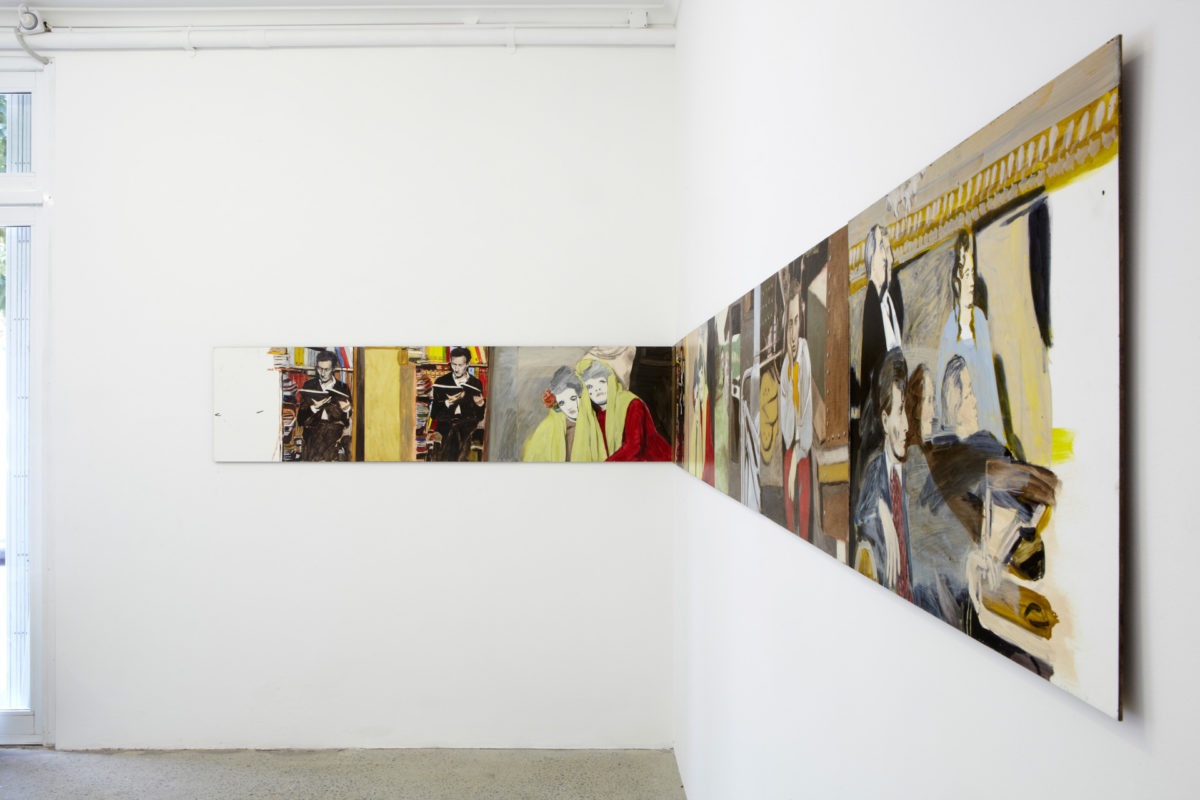
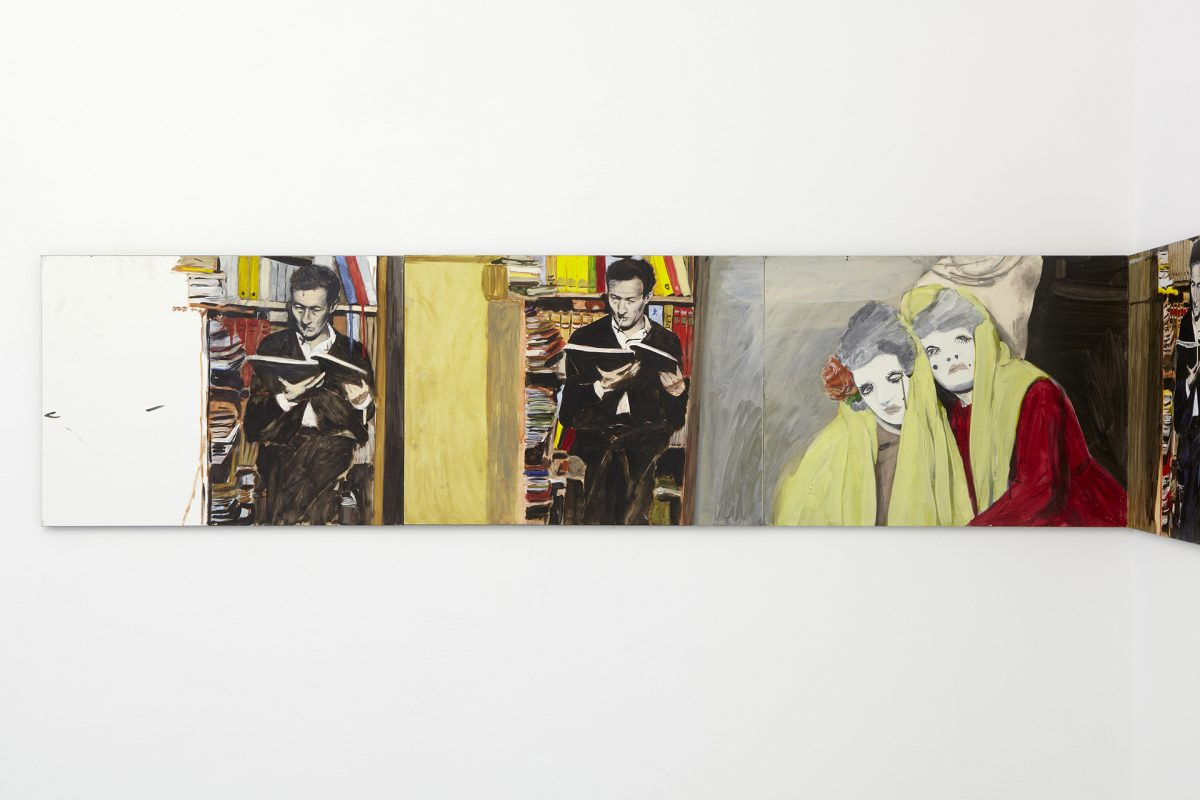
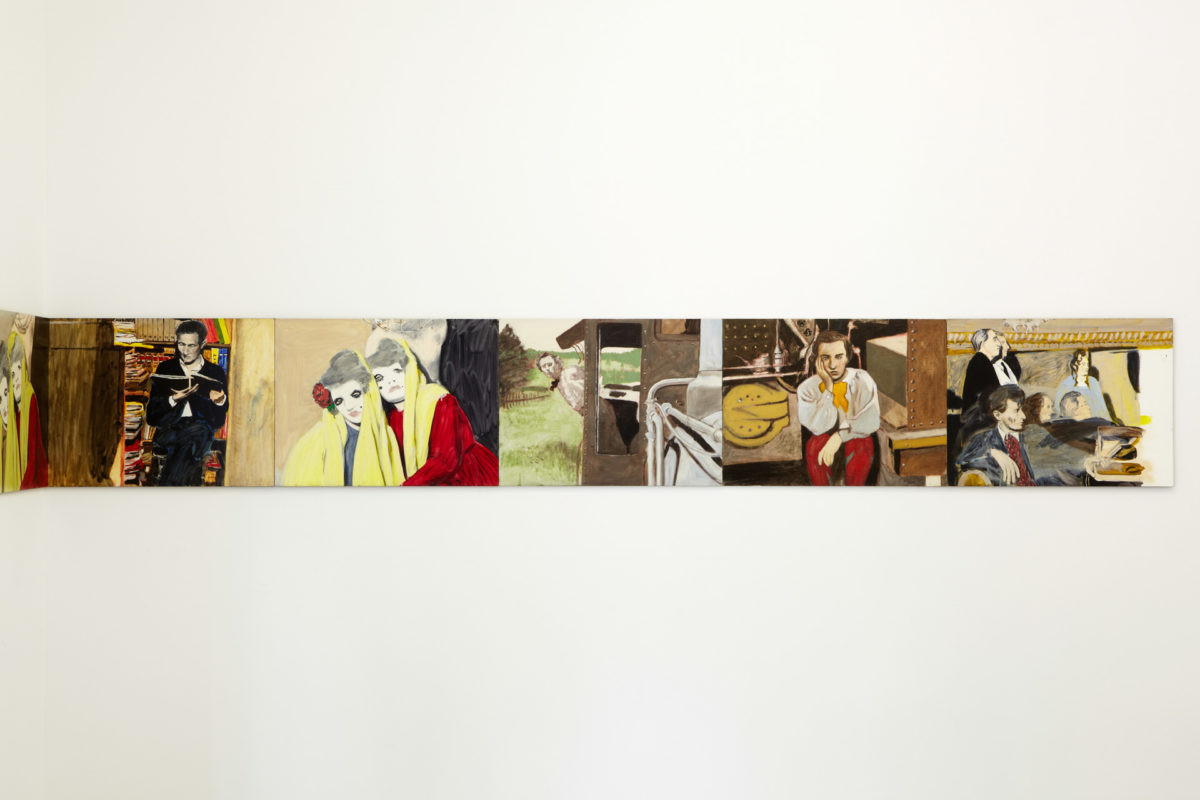
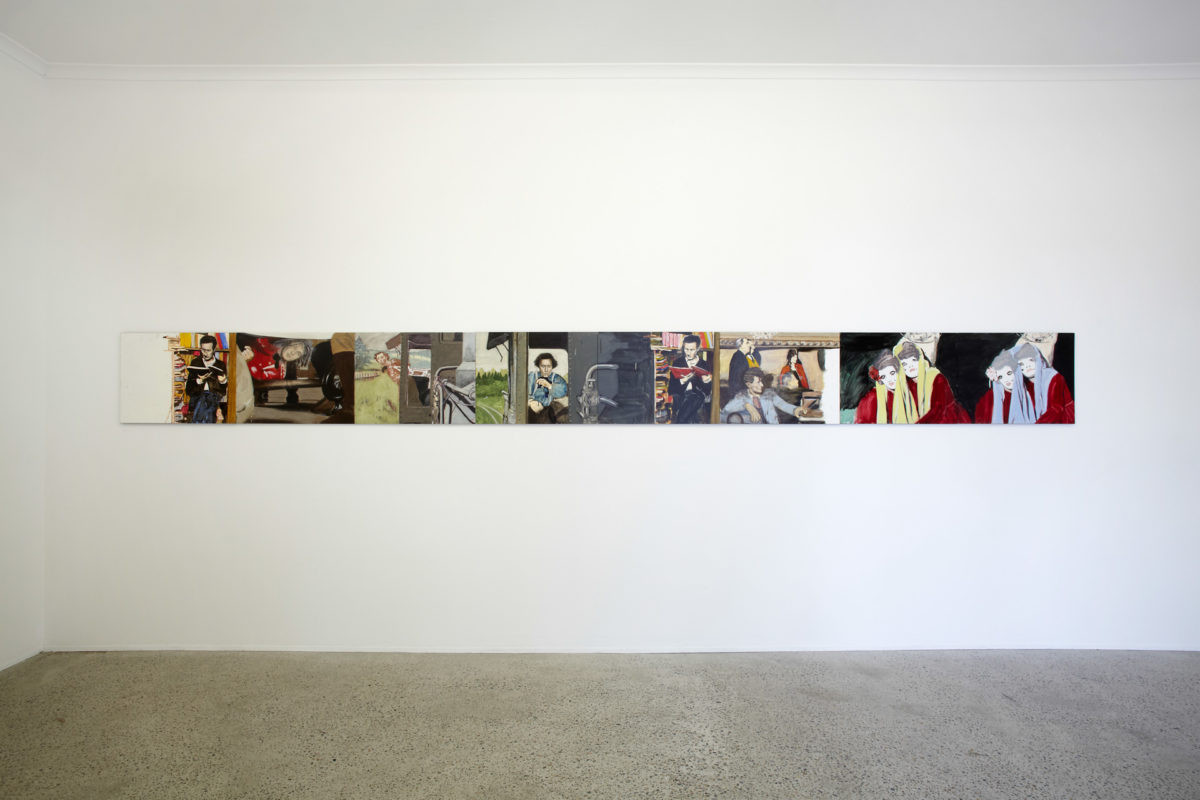
Not surprisingly, Smith has persevered with this quietly compulsive, yet intriguing and visually compelling mode of practice. Smith continues to paint all her works at least twice and to use cinema as a source, although she has returned to observe and paint ‘Enfants du paradis as muse more than any other film.’ And we encounter Smith’s captivation once more in her recent work, Memories for Tomorrow (2013), a series of striking oil panels that create a deeper, and more developed, exploration of this dialect. The title, aptly taken from Barrault’s memoirs, Souvenirs pour demain, frames images from his life beyond the walls of film as an accomplished theatre director, alongside scenes from Les Enfants du paradis and the American silent comedy The General (1926), starring, and co-directed by, Buster Keaton. As Smith’s subjects, both actors have striking features and expressive movements, one a master of mime and the other of physical comedy, that ‘lend themselves to paint.’ Similarly the films offer a myriad of aesthetic possibilities – interior architecture, portraits, landscapes and the motion of trains. Although the main connection remains the dialogue Smith creates through the process of painting and display. Smith selects stills that individually offer unusual painterly compositions and, as a group, they lead our eye across the surface as if following an interchangeable storyboard, much like the mobile cameras of mis-en- scène that pull the spectator through the film’s narrative.
In Memories for Tomorrow we are guided past an older, more contemplative Barrault reading in front of a bookcase, and later confronted by his piercing gaze recalling the regret of lost love of this earlier role. Nearby, Keaton hides awkwardly under a table, his infamous ‘stone’ face looking out at the viewer as if an accomplice, and then he reappears suspended precariously from a moving train. Injections of bold primaries punctuate the melancholy palette reminiscent of cinematic movement, sound and the narrative properties of light – casting a solitary shadow across our protagonist’s face or a dramatic burst of colour on the masked figures from Cervantes’ Numance directed by Barrault in 1937. The reappearance of these scenes surprises us, as the original image is replicated once, and then twice, as if reels jumping from a film.
Smith’s emotive paintings draw us into her world of filmic allegories and desire but, importantly, it’s the artist’s powerful brushwork and unwavering exploration of the same image that firmly casts our gaze back onto the painted surface. Broad sweeping strokes, moments of energetic mark making juxtaposed with quieter washes and lone drips. Charged by a process of repetition that, unlike film, refuses us multiple vantage points, and makes the audience self-conscious of their own relationship to the painting and expectations as a viewer. We grapple with the nature of the serial as we can no longer locate the original, distorting our perception of the artwork or, as Smith recalls, ‘it’s like when a word is repeated it begins to sound increasingly strange.’ Similarly, the artist’s copies always carry a slight visual stutter – a shift in colour, an unfinished scene, an additional figure – drawing us back to the painting process and inherent construction implicit in all image making. Like Smith, we begin a game of comparison, looking for variations that will forge that ‘original’ space again or catch what exists in between, that which is lost. Similar to acts of human memory in which we play sequences of events over in our minds so as not to lose sight of them, but subsequently cloaking them with layers of memories. And like every thought, with each coat of paint Smith moves further from the original and confirms this loss, this regret, the time passing, as to picture something is to inevitably imply it is no longer there.
Ultimately it is Smith’s enjoyment and dedication to painting that drives her and she is always eager to start a fresh piece, rather than finishing a work, as if searching for something beneath the malleable paint. Smith’s overtly obsessive practice can be related to our own fundamental devotion to images which, since the advent of painting, then photography, film and now digital media, have remained ‘the paradigmatic social relation’3 to both engage with our present and our past.
Altair Roelants, February 2013
All quotes, unless otherwise noted, are taken from Nicola Smith during an interview with the author in February 2013.
1 M.T. Pramaggiore & T.Wallis, Film: A critical Introduction, Laurence King Publishing, London, 2007, p.90.
2 Ibid.
3 Hal Foster, The Return of the Real, MIT Press, London, 1996, p.p 128.
Photos: Zan Wimberley