The Confessions
We now think of today’s confessional culture as grounded in our unique capacity to share ourselves through social media. But this culture is not new. In modern times, it has its roots in the church confessional box, in the confidence of the doctor’s office, in the dock of a courtroom. Indeed, modernity can be seen as marked by the confessional impulse. As Michel Foucault argues in The History of Sexuality, ‘Confession has spread its effects far and wide. It plays a part in justice, medicine, education, family relationships, and love relations, in the most ordinary affairs of everyday life, and in the most solemn rites.’
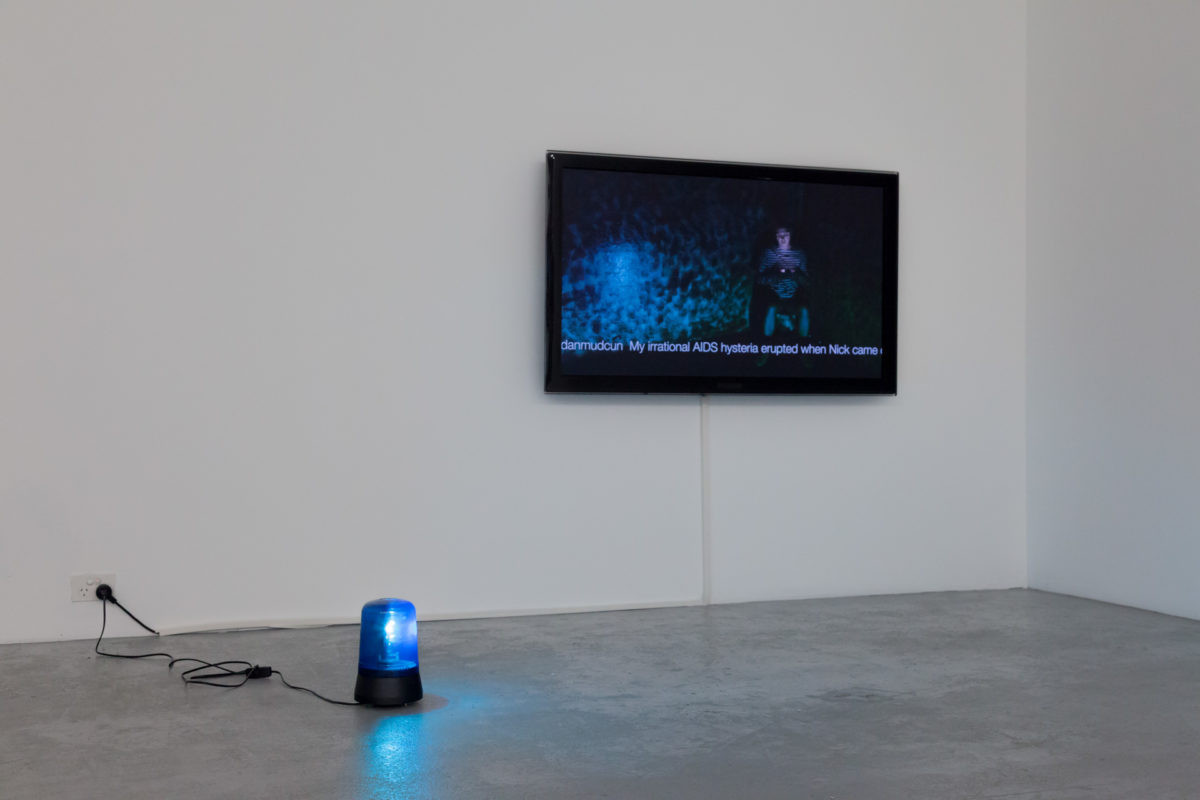
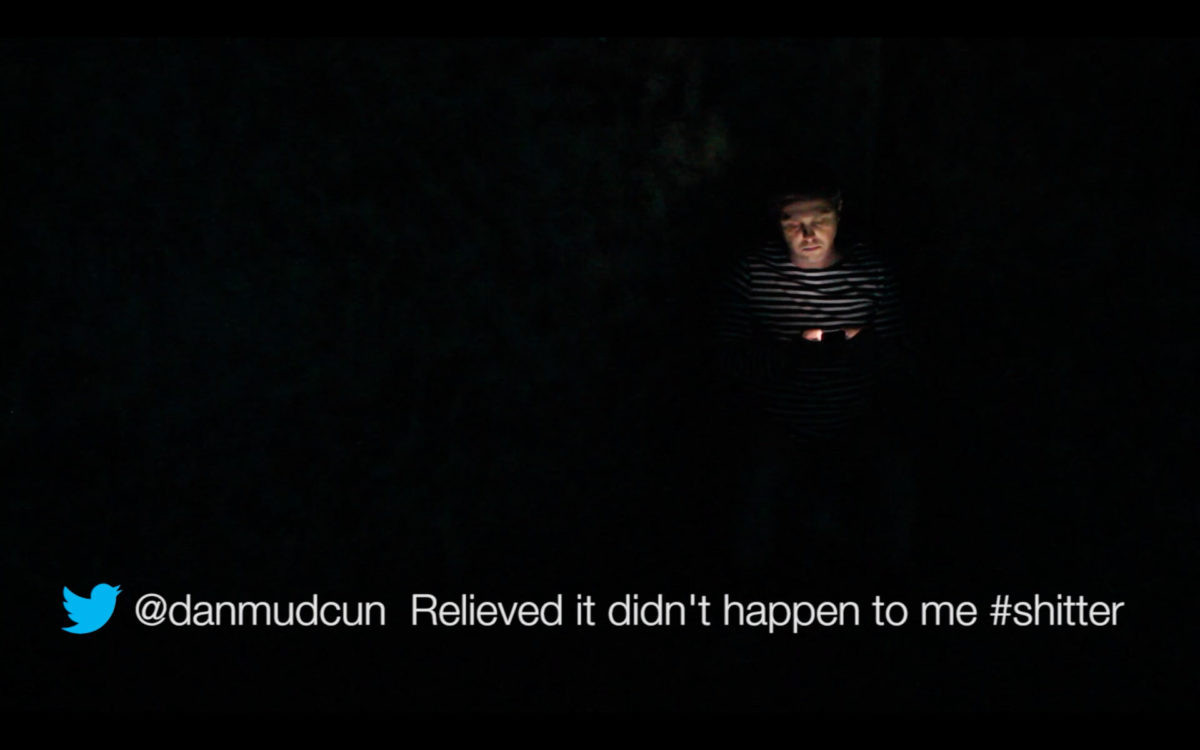
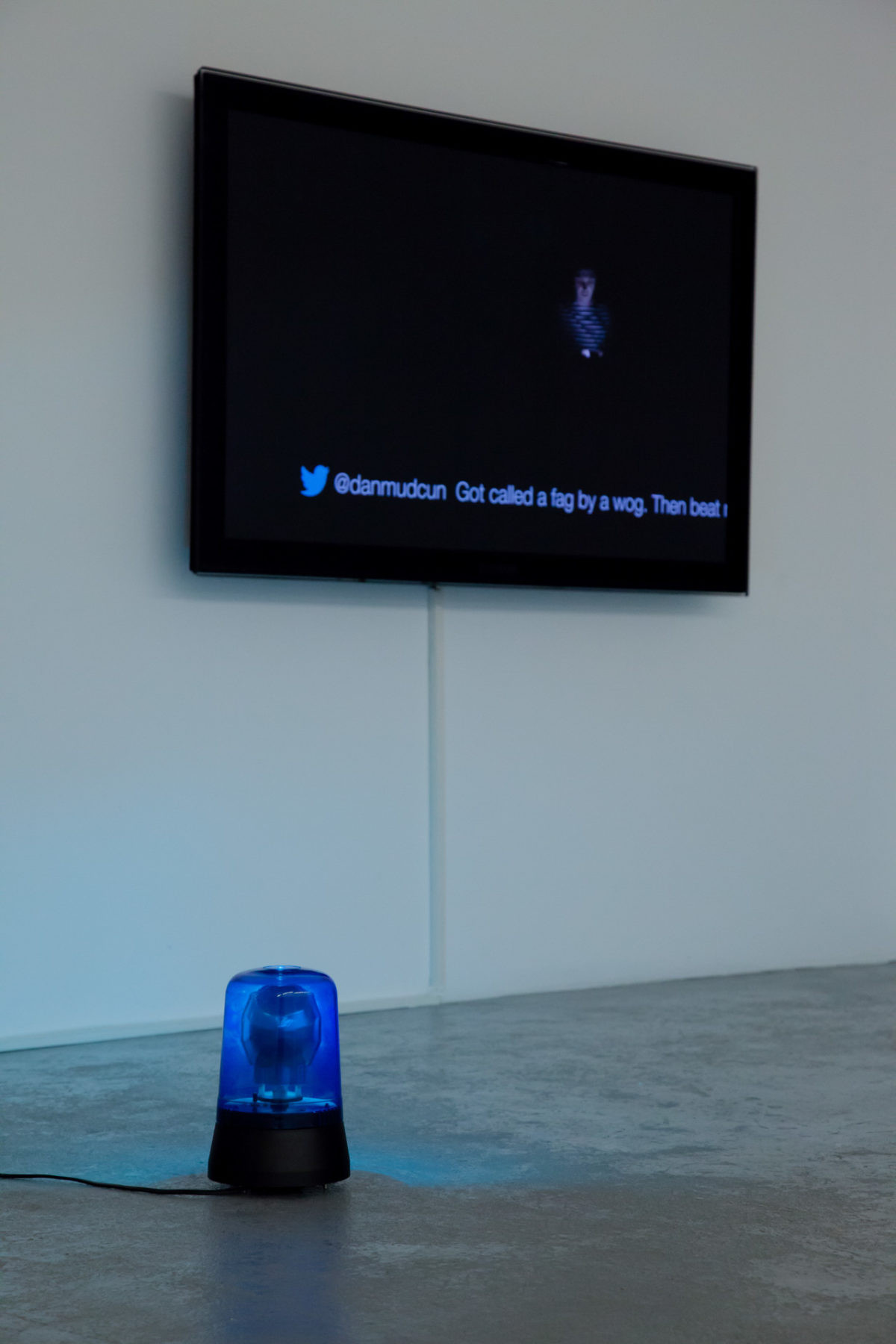
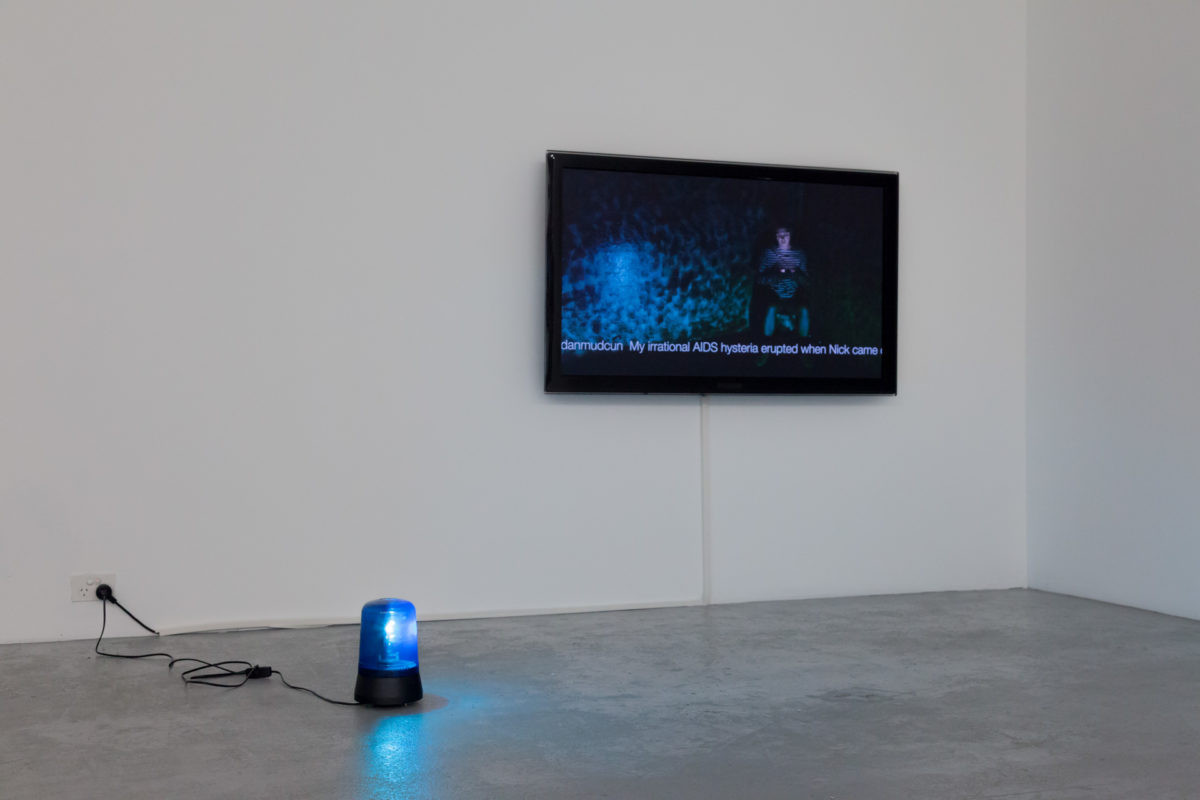
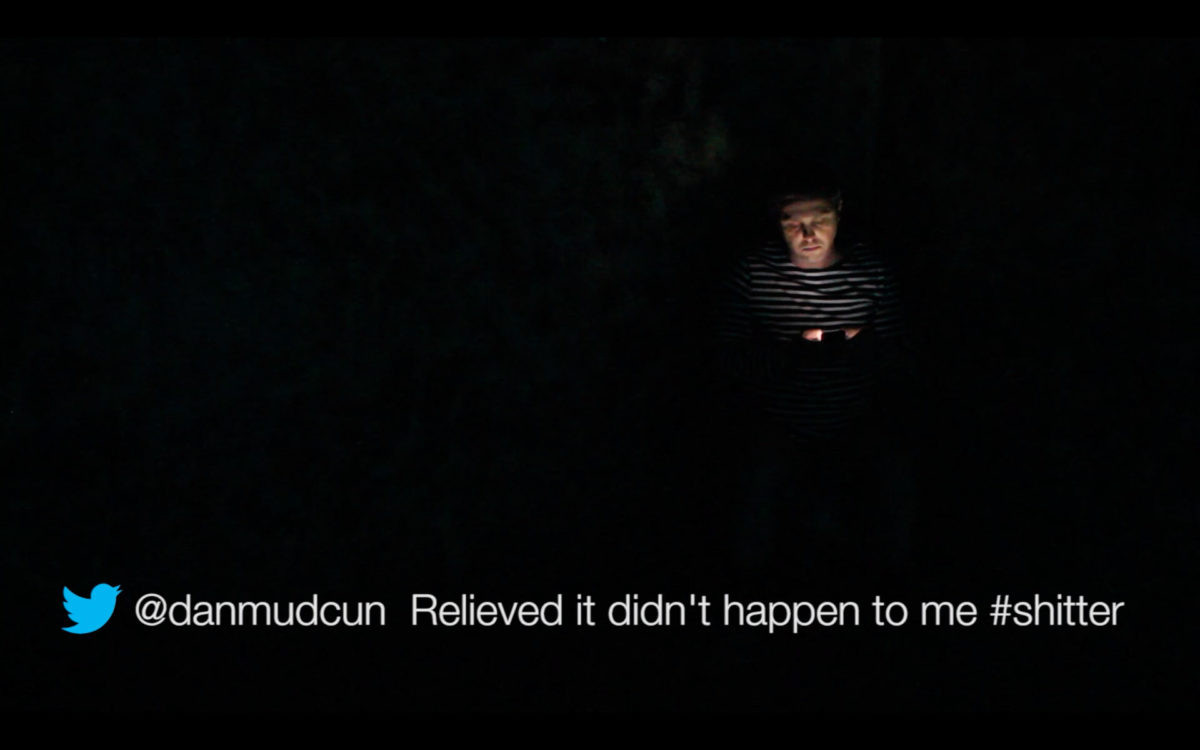
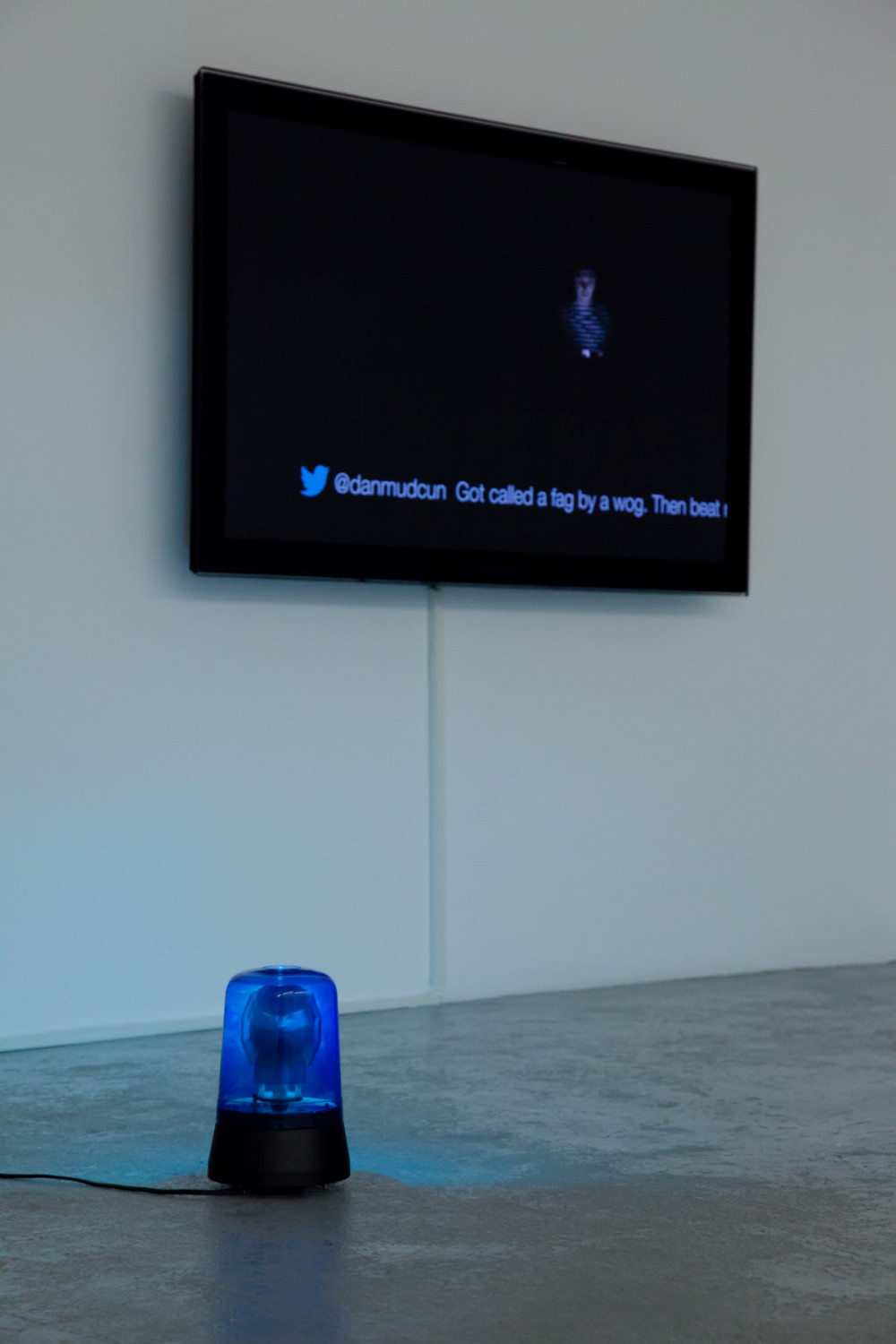
In his most recent work, Shitter (2015), Daniel Mudie Cunningham exposes himself to the sort of public scrutiny and judgment that is the lifeblood of social media, precisely in order to explore the nature of its confessional impulses. In Shitter, a prison toilet becomes the site for an obscene self-revelation of the once hidden shame that is too easily overshared on Facebook and Twitter. In a series of tweets sent from a cell, the artist’s innermost secrets crawl across the screen like a walk of shame after a drunken one-night stand.
Through a roll call of experience alluding to teenage kleptomania, childhood sexual abuse, drug use and porn addiction, Cunningham reveals the power relations implicated in the process of confession itself. The tweets switch between revelations about his own victimisation, his self-abuse, and the perpetration of bad acts – emphasising the complex and shifting nature of the relationship between perpetrator and victim. And he’s illuminated, not only by the light of the iPhone he holds, but by the rhythmic movements of an old-school rotating police beacon placed out of view on the floor of the cell. These two different light sources suggest the way our behaviours are surveilled both from without and within – how we internalise authority, obsessing over our thoughts and actions and externalising them any chance we get.
Taking a broader view of the artist’s practice, Cunningham’s entire body of work can be seen as a way of understanding his own life in relation to the confessional impulse that characterises contemporary culture. His childhood was awash with a born-again religiosity that led to an organised attempt to persuade him out of his homosexuality as a teenager through an ‘ex-gay ministry’ support group deeply implicated in a confessional culture. Far from disabusing him of the ‘evils’ of gay life, Cunningham has harnessed a critical understanding of the nature of confession in his art practice.
Three recent examples are the videos Boytown (2012), Dog Eat Dog (2013) and Unstuck (2013). These works certainly trade in the conceptual tropes that often constitute the dominant reading of this work – as he describes it, an ‘ongoing interest in queering the tropes of popular culture and music video conventions to flip the record on how meaning is regenerated in a world of remakes and covers’. But they are also very much bound to the obsessive excavation of a personal history marked by shame, humiliation, disgust, remorse, all infused with an erotic charge and a dark humour.
Made in collaboration with famed Sydney DJ Stephen Allkins, Boytown (2012) offers an understated commentary on the ethics and politics embedded in everyday life, as told through the manipulation of the cultural archive in the form of a remake of an iconic MTV video (Bronski Beat’s Smalltown Boy) set to a soundtrack of pop hit sampling. And while this clever referencing elevates the work beyond the personal narrative—connecting it to universal themes such as teenage alienation, suburban isolation, and the relentless otherness of gay identity—it’s also firmly rooted in Cunningham’s own shame-based, queer suburban childhood.
Dog Eat Dog (2013), while less overtly autobiographical, nevertheless involves another revelation about the artist’s past. Dressed in a dog suit, Cunningham gorges on a platter of thirty-eight hot dogs. The number of hot dogs represents both the age he was at the time and the number of men he had slept with whose names he could remember. Even the location – the rooftop of a Kings Cross apartment – situates the viewer at a specific time in the artist’s life. The apartment building is the site of a home he had shared with a long-time partner with whom he had recently parted. The video documents a typically post-break-up, sexually manic period that is reflected in the frenetic editing. The absurdity of the performance is further amplified by the pulsating soundtrack, which mashes the innocently boyish I Wanna Be Your Man by The Beatles (1963) with the grinding punk masculinity of Iggy Pop and The Stooges’ I Wanna Be Your Dog (1969).
But perhaps the most intriguing and revealing example of Cunningham’s work as confessional autobiography is Unstuck (2013). It’s ostensibly set in his childhood home, reimagining a moment in 1983 when the artist was eight-years-old. Seated next to him at the dinner table is his brother, Sean Mudie, as a five-year-old. This is indicated by the masks they wear – faces of themselves captured in photos of the time taken by his grandfather, an amateur photographer. His other two brothers are absent, both because they would have been in bed at the time but also because, tragically years later, they died as young men. The work recreates the horrific ritual of the evening meal under the menacing authority of the artist’s grandfather. In a perversely brutalising yet civilising gesture, the children were punished for having their elbows on the table by being made to hold books under their arms.
The mask is perhaps the most overt suggestion in his work of the way its autobiographical devices serve to conceal as well as to reveal. While the careful viewer can attempt to decode some of the more inscrutable signifiers, ultimately Cunningham protects himself through the very process of confession. He is able to gain mastery of his past by controlling how it is repurposed, repackaged, and represented in the present.
The essential difference between modern and postmodern confessional forms is that the mass media has managed to facilitate the integration of the various types of confession that were previously the domain of discrete disciplines. As Foucault notes of these specific modes of confession: ‘one confesses one’s crimes, one’s sins, one’s thoughts and desires, one’s illnesses and troubles; one goes about telling, with the greatest precision, whatever is most difficult tell’.
The democratising impulses of the digital public sphere have enabled a further cultural shift. No longer is authority the singular domain of the expert (the priest, the judge, the doctor, the therapist, even the talk show host). The public themselves now have access to this power. In the same way, Daniel Mudie Cunningham’s work undermines the conventional power relations operating in his own past traumas, appealing directly to the audience to make its own judgments.
Carrie Miller
Photos: Docqment