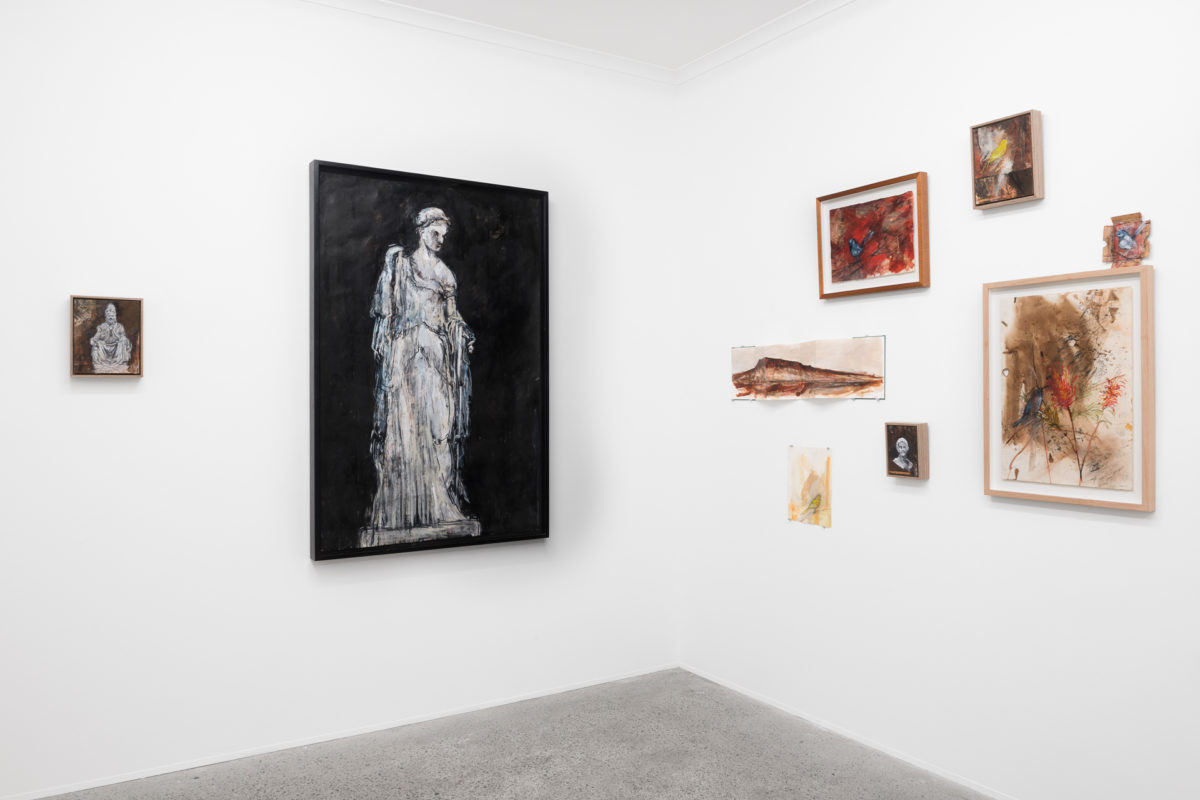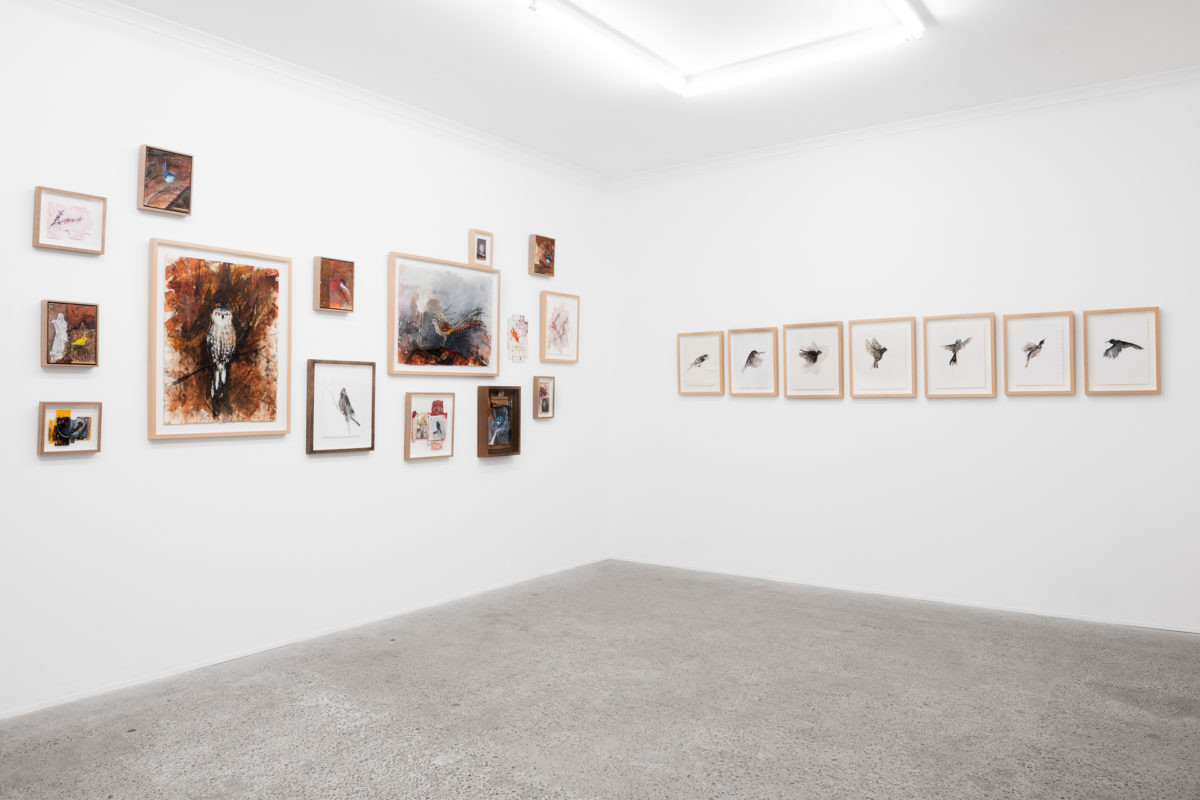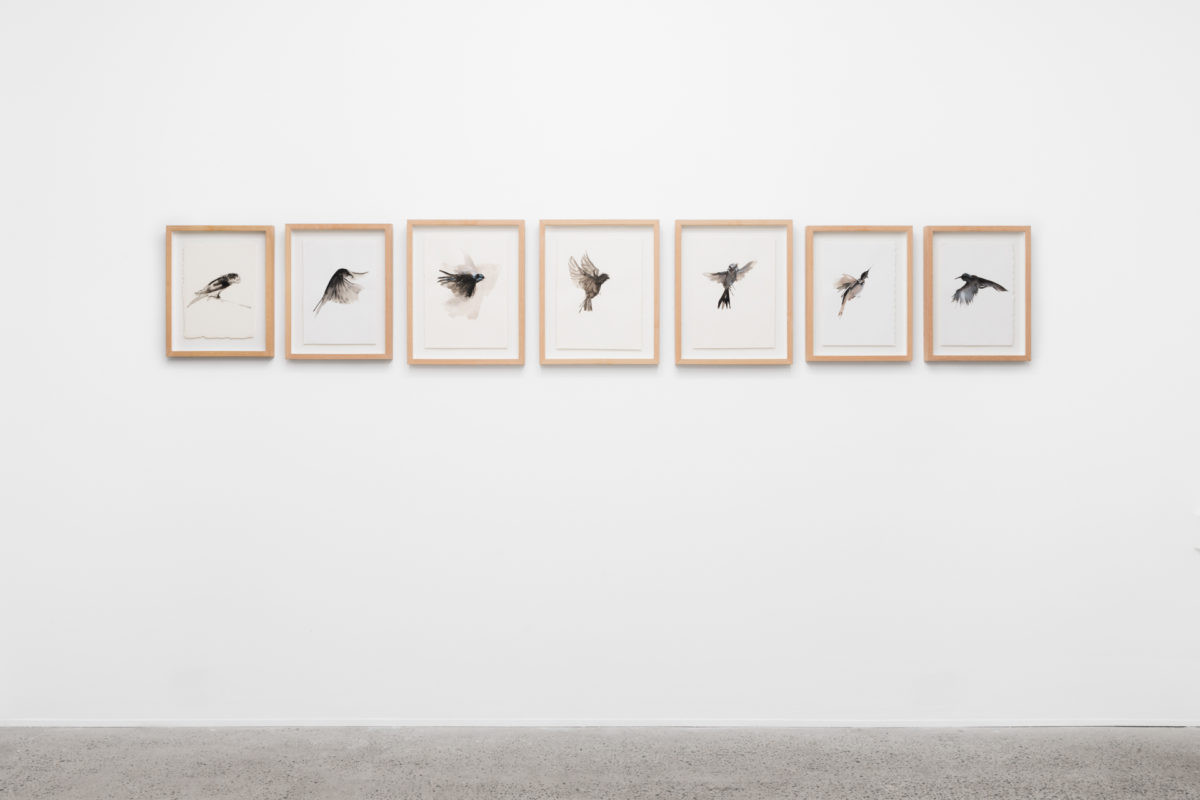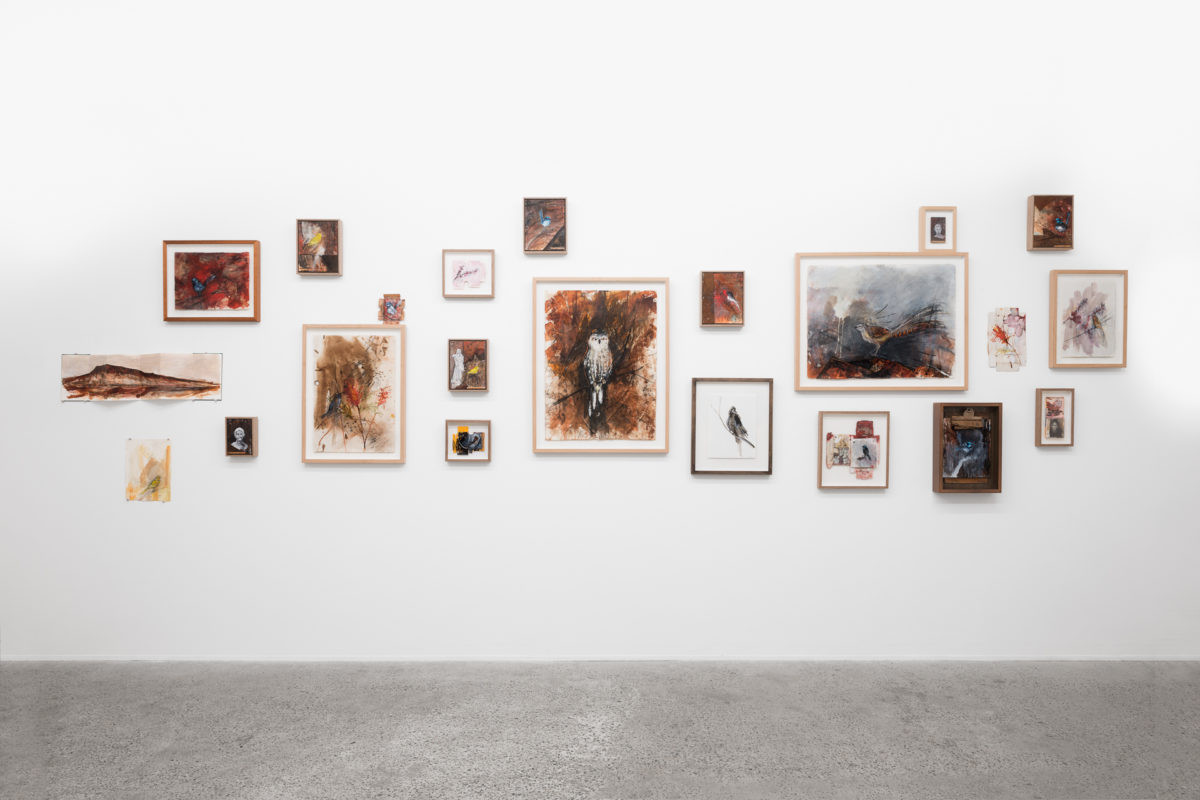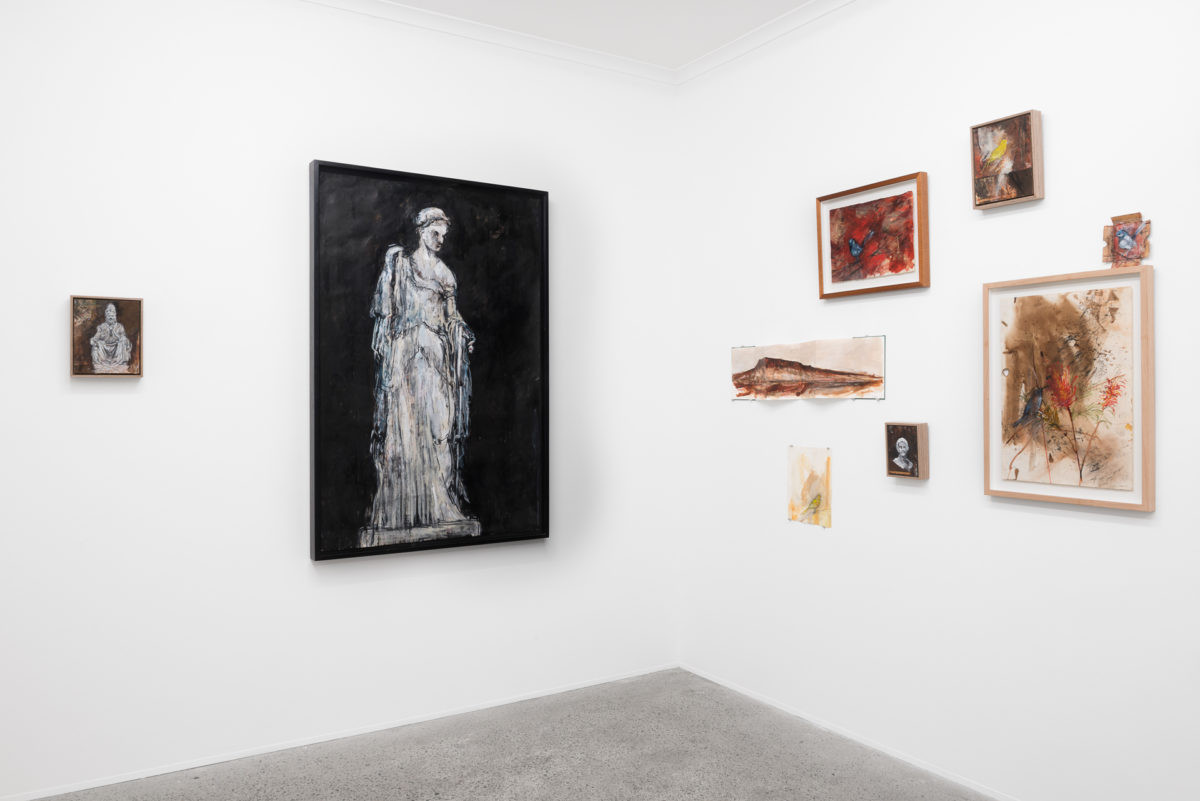
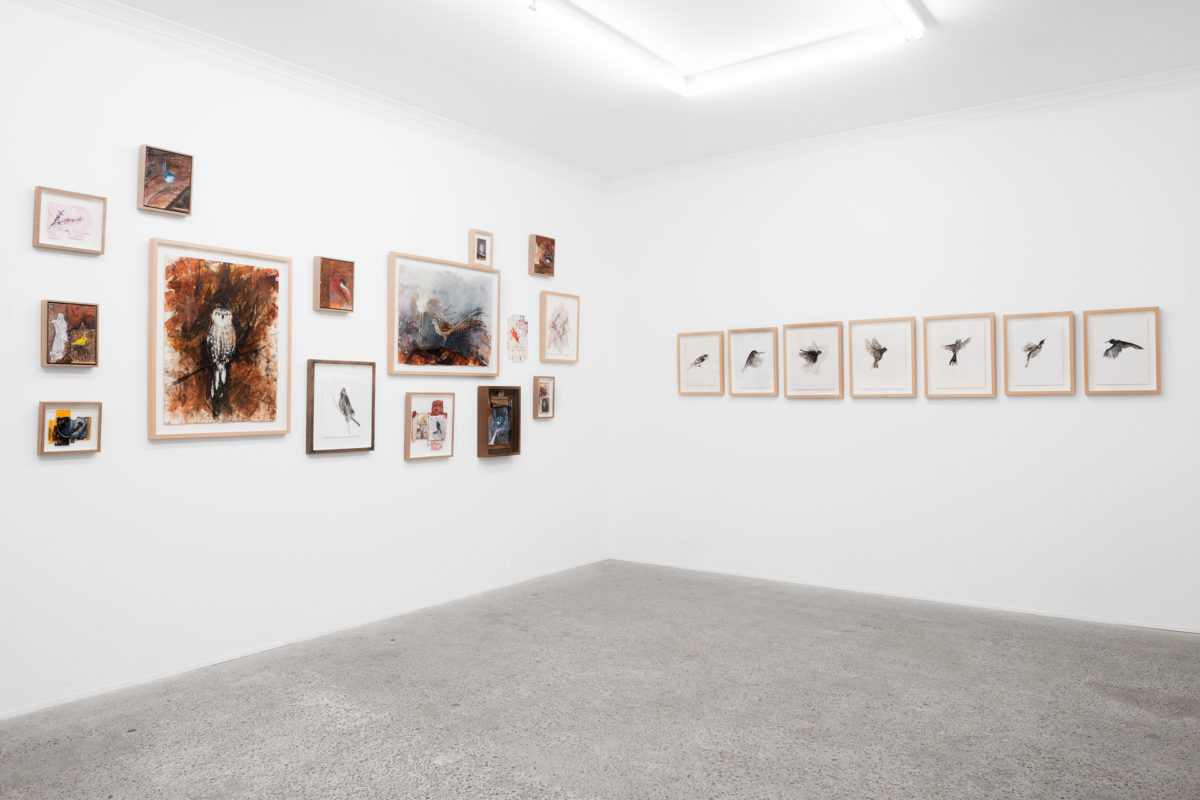
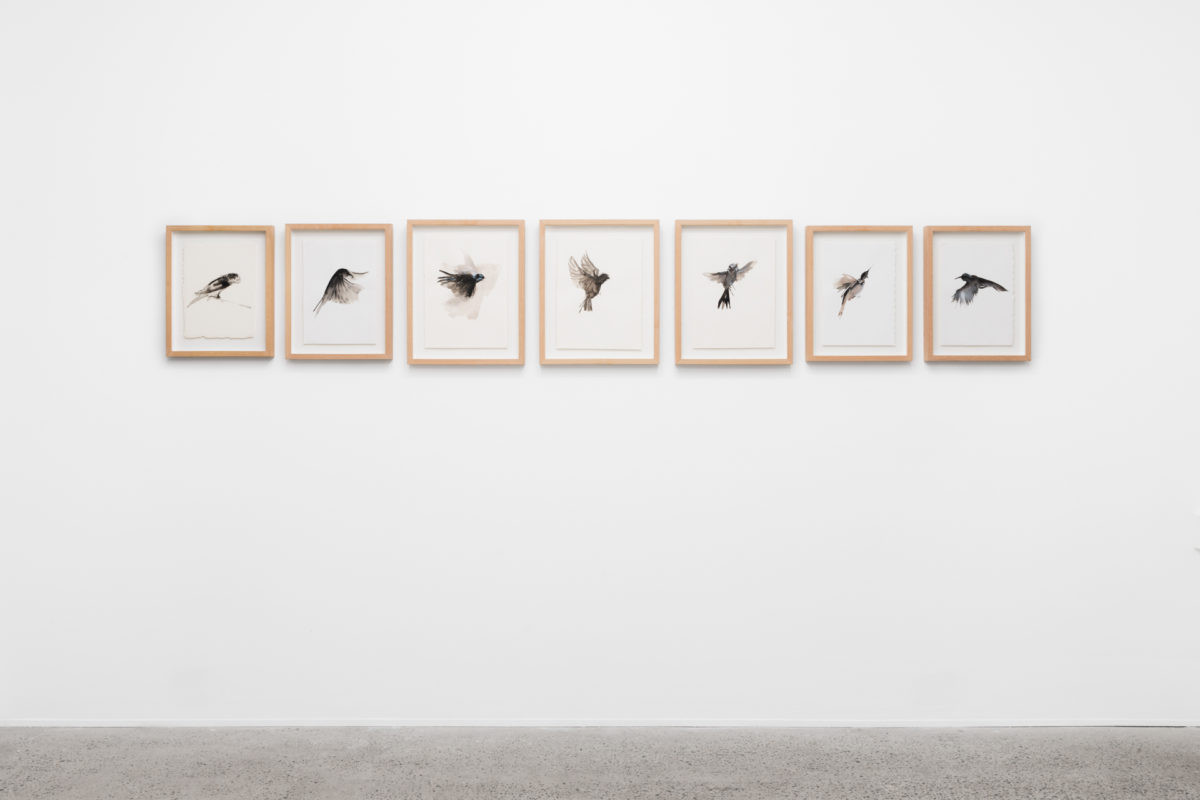
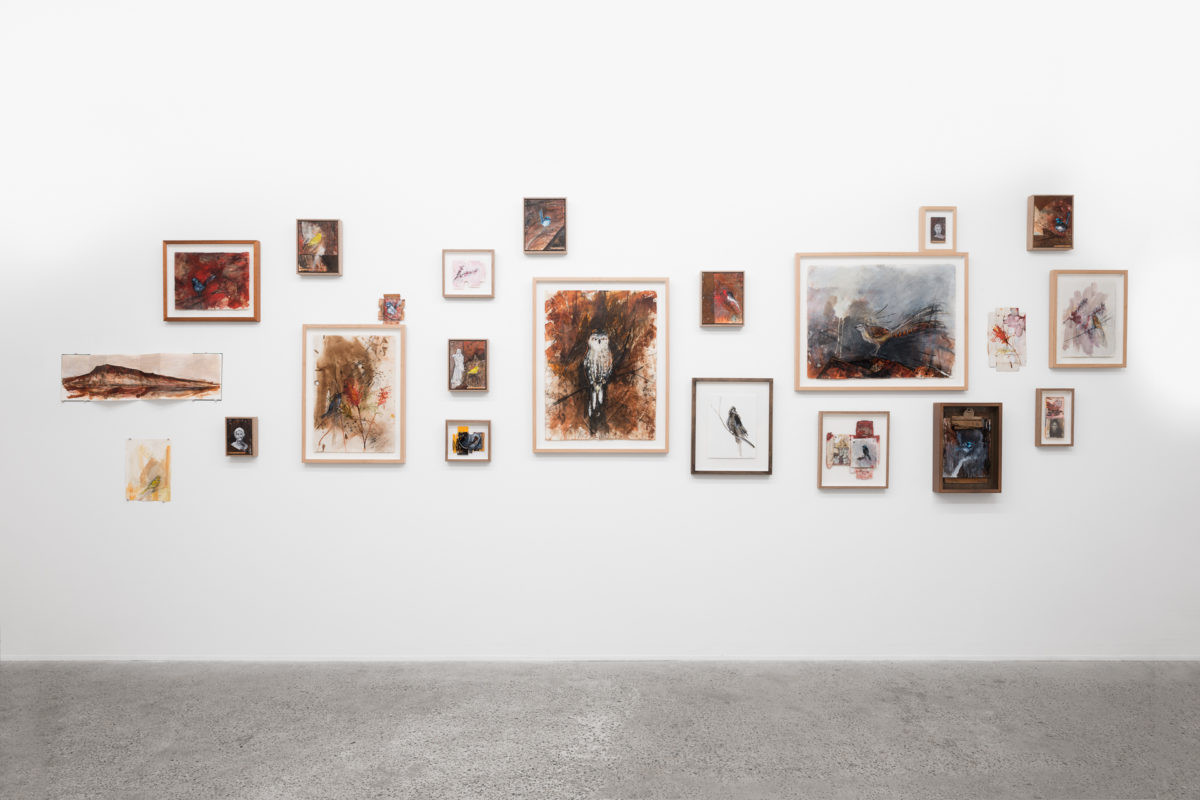
A beautifully puzzling incoherence pervades Ralph Hobbs’ solo exhibition The Canary in the Cage at Galerie pompom. There is an undeniable and unrestrained exuberance to a body of work that seems a series of brightly fleeting thoughts, delicately flickering illumination on some grander, hidden theme.
Each of the small paintings packs a condensed and poignant lyricism. In the larger work, there is a meandering ebb and flow that blurs the line between comprehensibly figurative and chaotically abstract. His birds are gentle and graceful focal points of natural beauty. His figures are a haunting recollection of a time long past. His found objects explode across the wall like a deconstructed Joseph Cornell assemblage sculpture. This feels like a disembodied dream of ancient statues and discarded objects, peopled by vivid birds.
Some of Hobbs’ birds are beautifully rendered, while others appear almost out of an accidental brushstroke. Whatever makes the mark is used - burnt stick, chalk, paint, ink, spit, pen, brush or finger. The work becomes layered, textured and almost physically manipulated into existence. There is an echo of Anselm Keifer—an artist deeply admired by Hobbs—in the worked-over layers of pigment, the painted over objects, until, out of process and chaos, comes something balanced and complete. One step less it would be unfinished, one step more and it would be overwrought.
If Hobbs’ attitude to pigment is almost perverse, his relationship with paper is borderline abusive. The paper is dragged through the dying and blackened embers of a fire, pulled through desert dirt to scratch and scratch its surface, until finally it is torn and ripped into shape. In this, it is the land that marks the paper, rather than the artist reproducing an exacting image of the land. In a very purposeful way, it is the reverse of more conventional landscapes. A slightly accusative antithesis of many early European artistic depictions of Australia, where landscapes were used as sales catalogues to entice the colonists down south.
In those first colonial expeditions, it was as much about exploration as exploitation. But mere discovery was not sufficient. The prevailing thought then was that something did not exist until a specimen was catalogued with detailed drawings and careful lettering and returned to the Royal Society in London.
“Colonialism is to catalogue, capture, image, document, constrain, in an attempt to own,” explains Hobbs, “But birds do not know the land is owned and I want that contrast between the two, the frightening delicacy of these birds against the harshness of a land that can’t be owned.”
And although Hobbs’ birds are recognisable, there a Splendid Wren, here a Scarlet Honeyeater—he does not appear interested in the exacting verisimilitude of those early explorers. Hobbs’ classification system is more visceral. An impasto charcoal line, a smear of red pastel, a thumb smudge of green and yellow to record a parrot. His rugged underlying landscape is red dirt and ochre roughness. His childhood Driza-Bone jacket is torn to shreds and used as mountains. Hobbs’ cataloguing system is more evocation and feeling than pen and ink.
If the birds serve as rhapsodic odes to timeless beauty, the statues of Pope Sixtus V and Julius Caesar are a mournful ballad to their creators long ago demise. This fascination with the ancient—the remains of the past—is paralleled in Hobbs’ own process, and work is made on what came before, reworked, reimagined, rebuilt, much like the cities Hobbs takes so much inspiration from. The work becomes a bittersweet punctuation mark to our own impermanence. In total, it is an eloquent indictment of fallen, and falling, civilizations and a bewildering celebration of ephemera, loss and death.
Therein, then, lies one answer to that initial puzzle. The paper was made on a whiskey soaked trip to the desert with John Olsen. The birds from observations made trekking though Tasmanian forests with James Drinkwater. The statues meticulously recorded while sitting alone in one Italian piazza or another. Hobbs returns from all of these expeditions with his found objects, his charcoal smudged birds, his careful renderings of the remnants of Rome. It is a collection of his own deeply personal artefacts and somewhere at that most delicate point where beauty, fragility and chaos meet Hobbs, has, perhaps, become the first post-colonial cataloguer.
Jonathan Dalton
February, 2019
Installation images by Docqment